A tale of nature, wildlife and birding from Cheshire, North Wales and across the globe....

A tale of nature, wildlife and birding from Cheshire, North Wales and across the globe....

Wednesday, 21 October 2015

Norfolk Birding Bonanza - Blyth's Reed, Red-flanked Bluetail, Isabelline Shrike and warblers galore!

With a cluster of top quality birds on the Norfolk coast coupled with the promise of strong easterly winds all weekend, the tantalising lure of Sibes proved too much to resist, and we made the decision to head to Norfolk for two days in order to try and catch up with the bonanza of avian delights on offer.

Driving down on the Saturday and arriving at Wells Wood for around 1, a whole host of bad luck and timing meant that we missed both the Blyth’s Reed AND the Red-flanked Bluetail, with each one showing while we were searching for the other! The Isabelline Shrike at nearby Holkham also gave us the run-around, and no sooner had we got our bins on a distant Shrike (there had also been a Great Grey knocking around in the same area) it flew deep in to cover, with us not having been able to make out any detail in the now driving rain and approaching darkness.

Thankfully, after a tasty Chinese and overnight stop in Kings Lynn, Sunday dawned much more promising, and despite being on the back foot we were able to catch up with all our target species in just the one day.

Due to Blyth’s Reed Warbler being a lifer for both me and Alex, we started with what had proved to be the trickiest species for many to connect with, staking out the patch of scrub it was frequenting for the first hour in the morning in the hopes of getting a glimpse of what can be a difficult bird to catch up with. Despite some initial confusion as to exactly which area the bird had been reported from first thing that morning, those assembled eventually managed to locate it down to the exact bush, the harsh tacking call betraying its whereabouts – all we had to do was wait for it to pop up! After an excruciating few minutes it obliged, the dull brown head peeking up above the brambles before perching right out in the open for several seconds, looking straight at us and giving fantastic views (for a skulking and elusive warbler that is) to all those on our side of the bush. Moments later it was gone, vanishing back in to the depths of the bramble thicket and deep under cover.

Much more grey-brown in colouration than the rufous buff brown tones of our normal Reed Warblers, with a relatively short primary projection in comparison, along with a darker tipped lower mandible on the bill, the subtle differences were definitely noticeable in the field. Favouring shrubs and bushes as opposed to reeds, this was also a typical habitat for a Blyth’s Reed Warbler to frequent, and we were thrilled to have got such close views, with the bird being mere metres away.

Having got Blyth’s Reed in the bag before 10, we headed over to the dried up drinking pool in the hopes of catching up with what would be my second lifer of the day in the form of a Red-flanked Bluetail. This was a bird that I had been wanting to see for a very long time, having dipped one at Flamborough on a visit to Yorkshire a few years ago - on the day that typically the first for Cheshire turned up on Hilbre Island, just an hour away from my house! I’ve loved Red-flanked Bluetails since I was very small, having always admired the photograph of a beautiful blue male in my red Collins bird book, so this was probably the bird I was most eager to see.

After a 20 minute wait having just missed the Bluetail showing only moments before we arrived, we eventually caught a glimpse between the tangle of trees as this blue tailed wonder hopped between the branches. Flitting from bush to bush and feeding on the ground amongst the bases of the trees, we eventually got much better views as the Bluetail flew up to the tops of the taller trees right out in the open, flicking the characteristic blue tinged tail and with the rusty red patches on the flanks clearly visible.
Red-flanked Bluetail - Norfolk
TERRIBLE shots of the Bluetail!!
Red-flanked Bluetail - Norfolk
Being either a female or a first winter male due to the drab colouration (as opposed to the bright electric blue of an adult male) this bird has been loyal to the same small patch of trees for a number of days, and while elusive, tended to put on a good performance for the crowd of admirers at regular intervals.

Satisfied with our views and with the rain now starting to fall, we headed further down the path to hopefully connect with both the Hume’s Warbler and one of the many Pallas’s Warblers that had been frequenting the trees for several days. Whilst Hume’s wasn’t a lifer for either of us, having seen the Warwickshire bird that overwintered two Januarys ago, it was still nice to see another, and we literally bumped in to this bird, with me spotting it on an open branch right in front of us at eye level after another birder tipped us off that it was calling in the trees directly to our left. Getting much better views than 2 years ago, with the bird calling loudly and frequently as it darted through the branches, the subtly more silvery and washed out tones in comparison to a Yellow-browed were definitely noticeable, as was the shorter and faster call.

The sheer abundance of Goldcrests in this area was overwhelming, seemingly on every branch of every tree, their tinny high pitched calls echoing all around. A beautiful male Firecrest further in to the pines was a fantastic find by Alex, showing amazingly well and providing my best views in years of this often hard to come by species. My second favourite British bird, I always love to see one, but yet again this one proved to be camera shy and was determined to avoid my lens.

With the car park running out we needed to head back, but a large crowd gathered around a line of trees further down the path caught our eye. Hurrying over, it transpired a Pallas’s Warbler was on view and showing – one of my target species for this year and another bird I have been wanting to see for a good while. With some top directions, we were soon able to get on this tiny warbler, flitting amongst a Holly tree like a small fairy, continuously feeding and hovering between the leaves. With the bright yellow supercilium clearly visible through the leaves as if fed, along with the large white wing bar, it was fantastic to watch as it dashed through the branches, only occasionally coming out in to the open and providing typical Pallas’s views! With several present over the weekend but proving very difficult to pin down, it was great to jam in on this eastern wanderer by chance.

Despite the Holkham Isabelline Shrike having been reported that day, the individual at Beeston Common near Sheringham had been showing amazingly well, and even though there was an additional 35 minute drive, we opted to head there instead of trying Holkham again. This proved to be an excellent decision, and as soon as we had arrived at the layby and walked the 2 minutes to the patch of ground the shrike had taken up residence at, we caught sight of it in a bush perched right in front of us. No running, walking long distances, waiting for hours on end or tracking a bird endlessly over a site – the ideal twitch!
Isabelline Shrike, Norfolk
With a much plainer back as opposed to a Red-backed Shrike, the Isabelline performed like a star, regularly diving to the ground for prey and hovering to catch insects mid-air, often returning to the same perch to impale or eat a number of wasps. 
Isabelline Shrike, Norfolk
The beautiful rusty coloured tail
Isabelline Shrike, Norfolk
The Shrike and a Blue Tit determined not to look at each other!
Satisfied with our views, having watched the shrike flit from bush to bush in front of us for a good while, we headed back to the car where a Long-eared Owl had been found in a nearby Sycamore tree. Having only just arrived in off the sea, this tired visitor seemed settled amongst the boughs, cryptically camouflaged and requiring just the right angle of view to make it out behind the leaves.

With a showy Olive-backed Pipit just a few minutes up the road (our route back would take us directly past the site) it would have been rude not to call in. Having only seen one bird prior to this at Spurn last autumn, with very brief views of it in a bush before it flitted out, I was keen to see one well in a lot more detail. Despite an initial wait of 20 minutes or so when the bird was assumed to be in a tree, the call eventually went up as one eagle-eyed birder had spotted it in the wood – behind us! All the assembled birders had their backs to it, and who knows how long it had been strutting about unnoticed while everyone was looking the other way.

The light was far too poor for any decent photos to come out, but through binoculars we enjoyed great views as it pottered amongst the leaf litter. Quite a large pipit, the prominent gold supercilium was unmistakeable, and it reminded me slightly of the Northern Waterthrushes in New York earlier in the year – if this was foraging at the side of a muddy water inlet I would definitely have done a double take at first glance!

With four lifers over the course of what had been a fantastically productive day in Norfolk, along with a whole host of other amazing birds, our trip had been a complete success, resulting in what was probably one of our best days birding in a good while. Cleaning up on all our targets, huge thanks to Alex for driving and convincing me Norfolk would be better than Spurn! With Isabelline Shrike also being a milestone bird in being my 350th species for Britain, the quest for 400 is now well and truly underway! 

Monday, 12 October 2015

Autumn weekend at Spurn

A two day trip to the fantastic coastal spot that is Spurn this weekend resulted in the expected scattering of east coast migrants as well as a lifer in the form of a Richard’s Pipit in one of the fields opposite West Mere Farm at Kilnsea.

Having not been seen for a good hour when I got to the field in question and with only 2 other birders staking out the grass where it was last spotted, it soon turned in to a waiting game and a test of perseverance. With Alex checking the nearby hedgerows for migrants, I stuck it out in the hope of connecting, and sure enough, after ten minutes or so, the only other remaining birder had it in his scope, the pipit giving good views as it hopped out in to the open in front of the water trough.

Much larger than a Meadow Pipit, with extremely long legs and an almost thrush like facial profile due to the head shape and bill, this distinctive pipit was a much awaited lifer for me after not counting a bird seen very briefly on the Great Orme 3 years ago having just got a fleeting glimpse of the top of a bird’s head!

After calling Alex back, we both got nice scope views as the pipit moved through the long grass, only becoming visible when it popped its head up to stop and scan around, standing upright with its neck outstretched. Despite moving quite a way across the field, we still managed to track the bird through the grass, occasionally coming right out in to the open so we could really admire the bird in full. At one point, it even flew up and came closer, giving a first-hand opportunity to hear that characteristic flight call – quite similar to that of a sparrow.

Satisfied with our views of the Richard’s Pipit, we stopped by to admire the cracking male Black Redstart that had been frequenting the garden of the house opposite, before heading to Kilnsea Wetlands where an American Golden Plover had just been found. Despite having already seen one in Cornwall at extremely close quarters last year, it was still nice to catch up with another bird, and we were all incredibly surprised when a second individual dropped by to join it! Despite the plumage differences between the two (with both birds seeming to be at opposite ends of the scale in terms of variation) when the birds stood next to each other it was clear they were both exactly the same size, and not an AGP and a Grey Plover like some had suggested. 
American Golden Plovers - Kilnsea Wetlands
When both birds eventually flapped their wings to reveal dusky tones and no hint of any solid black armpit patches, the ID was settled beyond doubt. Around 20 Brent Geese, a whole field of Hares and two fantastic hunting Barn Owls in the fading light were a great end to the day.
Having stayed overnight in Hull, we returned early the next morning to see what migrants may have been brought in on the easterly winds during the night. Despite every single bush positively heaving with Goldcrests everywhere you looked (thousands must have been present at Spurn and Kilnsea alone) other migrants were seemingly thin on the ground, and it was hard work to produce anything of note.

Two Bramblings in the Crown and Anchor car park were a nice find, while a 1w/female type Redstart caused some debate as to whether it was of the eastern form samamisicus, or Ehrenberg’s Redstart as it is known, with some white on the wing panel hinting to this eastern form. Despite the relatively distant views as it worked a hedge at the far end of a field, some photos were obtained, although personally I’m struggling to assign it to anything other than a normal Common Redstart.

A cracking Yellow-browed Warbler in the third paddock at Sammy’s Point rounded off our second day nicely, giving brief but great views and calling loudly as it hopped from bush to bush – a true sound of Autumn and one I’ll never tire of hearing.

Sadly, the Pallas’s Warbler on Humber Side Lane in Easington didn’t play ball to the amassed crowd, and two visits failed to pay off, as the bird remained highly elusive as it presumably undertook a circuit around the cottages and fields, only being seen twice that afternoon.

With a Red-flanked Bluetail and a Dusky Warbler both being found at Spurn this morning, things are clearly on the move, and what has so far been a quiet Autumn looks to finally be getting some life injected in to it. With several weeks of October and the beginning of November left to produce the goods, there is still time yet for that much sought after Siberian beauty to materialise – a Rubythroat would look especially welcome perched nicely on the Cliff Farm entrance stone or hopping though Church Field! 
Spurn

Monday, 5 October 2015

Semipalmated Sandpiper at Slimbridge WWT

With a Semipalmated Sandpiper having been present at Slimbridge WWT in Gloucestershire over the past week, we cancelled our planned trip north to Spurn on Saturday and instead headed south instead to try and catch up with what is beginning to become a bit of a bogey bird.

Having previously dipped a Semi-p a few years ago at Hoylake, with another individual (again at Hoylake) never confirmed as to whether it was a Western or a Semi-p, there is still a gap in my British Sandpiper list where Semi-p should sit.

Arriving at Zeiss Hide, we were disappointed to see that the group of waders were extremely distant and only just visible (the fog wasn’t helping), being nowhere near close enough in such bad light to make out the level of plumage detail required to confirm Semi-p ID. 

As the fog started to lift and the light became a little better, a juvenile Little Stint was picked up amongst the many Dunlin present, along with a second small grey bird – thought by some to possibly be the Semi-p. Throughout the afternoon, the whole group of birders in the hide watched and observed this individual, split in two minds as to whether this was an adult Little Stint or the Semi-p. It was far too distant to get any details on the scapulars (the Semi-p would show a dark tip with a central line to the feathers, whereas a Little Stint would show the centres being all black), while the colouration (difficult to see through the fog) could fit that of both Little Stint and Semi-p. Whilst the bird did look larger than the juvenile Little Stint present, some adult Little Stints can look exceptionally large - like an individual we saw at Burton Mere a day later which was also initially mistaken for a Sandpiper sp. in poor light due to the size.

Whilst several people left happy and ticking the bird as a Semi-p and a lifer, I personally will not be. The bird was far too distant and in bad light to get the level of detail required to 100% say either way that this was the Semipalmated Sandpiper and not an adult Little Stint.

Having had amazing views of Semipalmated Sandpipers just a few feet away in New York earlier in May, I was struck by how long and thin bodied they looked, and how the legs were positioned quite far back along the body creating a front heavy look. 
Semipalmated Sandpipers - Jamaica Bay, New York
The Semipalmated Sandpipers from New York back in May this year
Semipalmated Sandpipers - Jamaica Bay, New York
I just didn’t get that impression from the bird at Slimbridge, which created some reservations personally about confidently calling it as a Semi-p. The overall structure also created more of a “Little Stint” impression to me than that of a Semi-p, and while the plumage could fit that of a juvenile Semi-p, I’ve seen several photographs of Little Stints looking identical. Whilst there is every chance that this was the Semipalmated Sandpiper, especially with it being seen in the two days that followed, I personally don’t feel comfortable ticking a bird when there is even the smallest element of doubt.
Semipalmated Sandpiper - Jamaica Bay, New York
Adult Semipalmated Sandpiper in New York - the bird at Slimbridge is a juvenile
Semipalmated Sandpiper - Jamaica Bay, New York
This experience also demonstrates to me that you should never really tick a bird on the basis of someone else’s opinion as to its identification unless you are 100% certain yourself and can see all the reasons as to why a bird is what it is. At one stage, the whole hide started watching a very pale and bright Dunlin for up to 10 minutes, convinced it was the bird we had been watching all day and convinced it was a Semi-p, some even leaving having ticked it as such.

To me, ticking a new bird on views like we had where there is a sense of uncertainty defeats the object of twitching in the first place – the whole purpose being to admire, watch and learn about new species as opposed to just getting a tick in a box next to a name. Hopefully, another Semi-p will come around soon providing much better views and allowing us to finally and confidently add it to our British lists.

Friday, 2 October 2015

Wilson's Phalarope at Vange Marsh, Essex

With a potential first for Britain in the form of an Acadian Flycatcher at Dungeness last week sadly out of reach due to work commitments, me and Alex decided to make up for the loss by travelling to Essex for the reliable Wilson’s Phalarope that had settled at Vange Marsh RSPB.

Being a little further away than we would normally travel for anything outside of mega status, we were glad for the change of scene and being a species we were both still in need of, Alex drove us both down to the south east, having only been to Essex one before for the Serins back in March. Arriving nearly 4 hours later, we made the short treck under the A13 and over the railway line, before following the trail through the meadows to view the water.

A marauding Marsh Harrier flushing all the birds as soon as we arrived was a little concerning (4 hours for nothing?!), but Alex soon expertly picked the Wilson’s up in flight and thankfully tracked it through the scope until it landed.
Wilson's Phalarope - Vange Marsh, Essex
A (very) record shot of the Wilson's Phal
Present on the flash now for over a week, despite the distance (a factor that had been putting me off) we still got good scope views of this American Phalarope as it fed and span around in the water, dainty in comparison to the nearby Ruffs and Redshank, but still evidently larger than our more familiar Grey or Red-necked Phalaropes.
Wilson's Phalarope - Vange Marsh, Essex
It could be anything.... it is a Wilson's Phalarope.... honest!
With a much greyer head lacking a distinct mask, as well as an elongated slender neck and long needle fine pointed bill, we could still pick up the subtle key features even at a distance, Alex even observing the yellow legs in flight. Now advancing in to winter plumage, there was still just the faint hint of colour visible along the neck.

Whilst not as close as previous birds in recent times in terms of both views and distance travelled, and nowhere near as spectacular as the gorgeous female summer plumaged stunner on the Isle of Wight a couple of years ago, it was still great to see what is an almost annual rarity to the British Isles and a species I have been hoping to catch up with after deciding the Cleveland bird back in 2011 was a touch too far (despite probably being an hour less than what we travelled last weekend!)

With a fine supporting cast of waders including Spotted Redshank, Ruff, a Little Stint and both a Green and Wood Sandpiper, it is a shame that the water is so far away for viewing – a small bridge and hide provided by the RSPB could really open up the potential for this clear wader magnet, perhaps even allowing the UK’s next Red-necked or Long-toed Stint to be unearthed….

Wilson's Phalarope - Vange Marsh, EssexTo visit: Park at end of Chestnut Road (TQ733876, SS16 4XJ), walk under the A13 and over the railway crossing, then walk right along the meadow path and left to view the water.
View of the flash - very distant!

Sunday, 20 September 2015

Red Helleborines in Buckinghamshire

Upon first opening my “Britain’s Orchids” book over 10 years ago, there were 3 species in particular that took my breath away. The curious Monkey Orchids that live on the Oxfordshire hillsides, the enigmatic and mysterious Ghost Orchid that only very rarely emerges from the depths of the dark woodland floor, and the exceptionally beautiful and graceful Red Helleborine, restricted to just three sites deep in the heart of our majestic beechwoods.

With large flowers tinted in a delicate shade of rose-pink, these stunning orchids instantly caught my attention, their extreme rarity just as alluring as their beauty. However the tight secrecy surrounding sites and the fact that flowering didn’t occur every year prevented me from seeing them – until now.
Red Helleborine - Buckinghamshire
With just three known sites in recent times, the Hampshire population has sadly now disappeared entirely, with no flowers having been spotted since 2003 and plants last occurring at the site in 2008. The Red Helleborines in Gloucestershire are unfortunately enclosed by a large and very high fence preventing close access to the flowers, and although having increased in number over the last few years, this year just one flowering spike has been seen. Visitors are also not encouraged. This just leaves the Buckinghamshire site as a location where close, but restricted and monitored access can be arranged - permits are required to visit and low key open days led by a warden are organised once or twice a year if the Helleborines flower.

Having managed to obtain a permit and taking a day off work to go on the second (and last) open day of the year, I arrived on site ready to finally see this most wanted of species. With just 3 visitors present on the Friday, our Monday tour had proved exceptionally popular, with record numbers booking on and meaning that we were split into two groups to ensure everyone got a chance to admire the flowers. With a brief tour of the site to enable the first group to take ample photographs, we soon swapped over and were led to the enclosure – impossible to find amongst the maze of trees unless you knew where you were going.
Buckinghamshire
A view of the surrounding countryside before being taken to the enclosure
Like the Gloucestershire population, the Buckinghamshire Red Helleborines are enclosed by several fences, with a large inner fence surrounding the orchids to prevent grazing by deers or trampling by humans. With the decision taken a few years ago to no longer allow entry through the fence, I was extremely glad my dad suggested I take my 400m lens with me – the macro proved useless!

Crowding around the metal wires we peered excitedly under the trees, and there, nestled among the blades of grass was a single Red Helleborine spike. Even more beautiful in person than in any photos, the dainty pink flowers were in an absolutely perfect condition and luckily facing the fence – we couldn’t have asked for a better specimen. Thankfully the fencing had gaps big enough to fit my lens through, and was luckily just far enough away from the orchid for my lens to focus on the petals (the closest focusing distance is 3.6 metres!)
Red Helleborine - Buckinghamshire
With no flowering spikes in 2014 and with just a single one this year, the future is looking quite uncertain at this site, with the population having been in decline here for the last 10 years. Following the lead of the Gloucestershire site where flowers increased after controlled management and the thinning of trees, the same seems to have had the opposite effect here in the Chilterns, with far fewer plants since the canopy was opened up. Even though there were several blind spikes nearby, the warden informed us that these were all clones of the same plant – not good for the long term survival of Red Helleborine at this site.

Whilst taking photographs, we noticed a small hoverfly visiting one of the flowers and I managed several shots of it caught in the act searching for nectar. With little known about Red Helleborine pollination, it is opportunities like these that enable us to further our understanding as to the needs of this delicate flower.
Red Helleborine and hoverfly - Buckinghamshire
Hoverfly pollinating Red Helleborine - Buckinghamshire
Platycheirus species of hoverfly - probably albimanus
With everyone satisfied with their views it was time to leave, and as a group we were led back through the trees and back on to the road, leaving the flower to its solitary existence once more.

With the Critically Endangered Red Helleborine on the very edge of its range here in Britain, and having already vanished completely from one of its former sites, it is a holding on to a very precarious existence indeed here in the UK. Several efforts are being made to aid with the conservation of this precious orchid, but with numbers declining, only time will tell how long the population here can cling on for. One thing for sure is that it would be a huge loss to the British countryside if this absolutely beautiful orchid was lost for good, unable to capture imaginations and inspire future generations like it did for me all those years ago. 

Monday, 14 September 2015

Wryneck at Fairhaven Lake, Lancashire

With a Wryneck having been present at Fairhaven Lake in Lancashire since last Thursday (along with 2 Barred Warblers that have sadly now departed) we paid a visit to see if we could catch up with what is usually a rare migrant here on the West Coast. 

Arriving at the pumping station compound to the right hand side of the lake where the Wryneck had been favouring for the duration of its stay, we joined the rest of the crown in anticipation of it showing and looking forward to seeing only my second of these delightful woodpeckers. 

After a spot of lunch while we waited, what must have been the quietest announcement ever that a bird was showing went up, and the crowds eventually realised someone had spotted the Wryneck, cryptically camouflaged as ever in the tops of one of its favoured Rose Hip bushes. Incredibly hidden and matching the bark to perfection, the (dreadful) record shot below exhibits perfectly the difficulty in picking out these masters of disguise!
Wryneck - Fairhaven Lake, Lancashire
With the bird only showing every hour or so when it chooses to perch in one of its preferred bushes or gorse, the Wryneck instead spent the majority of its time feeding on the ground and out of sight, taking advantage of the many ants on the sandy soil and abundance of grasshoppers in the area. Having previously seen my first and only Wryneck on the east coast at Spurn last autumn, it was great to catch up with this relatively local bird not too far from home.
Fairhaven Lake, Pumping Station Compound
Perfect scrubby habitat for a Wryneck to hide out in!
After the Wryneck had disappeared back in to the depths of the gorse thicket, we tried to find the now resident drake Scaup that had been present on Fairhaven Lake for several months, but even a 15 minute scout around the lake in one of the motor boats for hire failed to turn him up!

A quick stop at Preston Marina on the way home for the long staying 2nd winter Ring-billed Gull luckily resulted in success when I found it on the opposite jetty, putting an end to a string of dips for Ring-billed Gull this year in both Cornwall and Scotland! Much bulkier and larger than the Black-headed and Common Gulls, and with the black ring on the bill standing out even at a distance, there was certainly no mistaking this individual.
Ring-billed Gull, Preston Marina
 A great end to a fantastic day out in Lancashire! 


Tuesday, 1 September 2015

Black Stork Stakeout - Sunk Island, Yorkshire

With a Black Stork turning up at Spurn just under a month ago, I sadly never got the opportunity to make it up there due to a combination of work and a week’s holiday to Scilly, and the bird had unfortunately moved on before I had returned. Since then, there have been sporadic reports around Sunk Island and Stone Creek, just half an hour to the west, but these were merely flight views – never at a nailed on site to twitch like it was at Spurn. However, this all changed on Friday, when photos on the Yorkshire Birders Facebook page showed the bird in question frequenting the fields and creeks in the Sunk Island area, with the posts seeming to suggest that it had been settled for some time, having favourite haunts around the Old Hall area. With one poster even reporting that the Black Stork had come back to one creek in particular to roost for two nights running now, I knew this was the best opportunity I had to catch up with this often hard to connect with species.
Black Stork - Sunk Island, YorkshireGetting precise info on exactly which creek it was, me and Alex made the 2 ½ hour journey to Sunk Island to see if we could track it down. With no sign in the creek at half 2, we turned to plan B – driving slowly up and down Cherry Cobb Sands Road to see if we could spot the Stork in one of the fields or ditches there. This was where the majority of flyover sightings on the bird reports had originated from, as well as some of the photos from just a few days earlier, and I hoped we could either jam in on it in flight or find it stood in one of the fields. Unfortunately it wasn’t that easy, and whilst a flyover Grey Heron got our hearts racing early on, there was no sign of our Stork. Several Curlew feeding in the fields were a nice consolation, as were 2 flyover Green Sands, and 7 Whinchats in just one small patch were clear evidence that autumn migration was well underway.

Knowing that our best shot was the Stork coming in to roost that evening, we headed back to the small creek at half 6, hoping the bird would return here again. A tidal creek, with water levels controlled by the Humber, the water was now much higher than earlier on in the afternoon, although there was just a single Little Egret and a Common Sandpiper taking advantage of the tidal pickings. The owner of one of the cottages told us that he had seen the Black Stork that very morning making its way up the creek, and we wondered whether the bird had remained feeding in the channel all day, out of sight at the other end of the field.

Alex’s theory was proved correct, as at around half 7 I spotted something large, black and white creeping around the far corner – the Stork!! We watched as it slowly crept through the reeds and in to view – the whole of its body now on show, along with the exceptionally long legs and bill. Eventually, the Stork worked its way down the channel, feeding on the morsels that the tide had brought in and coming to a patch in the open, giving us great views of this continental visitor.
Black Stork - Sunk Island, Yorkshire
With a bit of an influx of Black Storks this summer, this particular individual was a juvenile, ringed in France before making its way across the channel with at least 1 other sibling – the bird that had frequented the Loch of Strathbeg for some time. An extremely hard species to catch up with in my opinion, with the majority of sightings as flyovers in different parts of the country, it has been a few years since the last twitchable bird.
Black Stork - Sunk Island, YorkshireBlack Stork - Sunk Island, YorkshireWith the light now fading and the Stork seemingly settled down for the night in the creek, we left it in peace and headed home – 5 hours of searching had definitely paid off and I had finally caught up with a bird that had been tormenting me all summer!


With news out later that evening of its whereabouts, the bird was still there in the creek early the next morning with reports at dawn, before flying off at just after 7am. After a brief return, it flew off again at 10:10am, circling high over Stone Creek before gaining height and disappearing off south over the Humber where it was lost to view. With no reports on the Sunday afternoon or the bank holiday Monday, it was clearly a stroke of luck that I managed to catch up with it on the Saturday, and I’m exceptionally glad I made the effort! 
Sunk Island, Yorkshire

Thursday, 27 August 2015

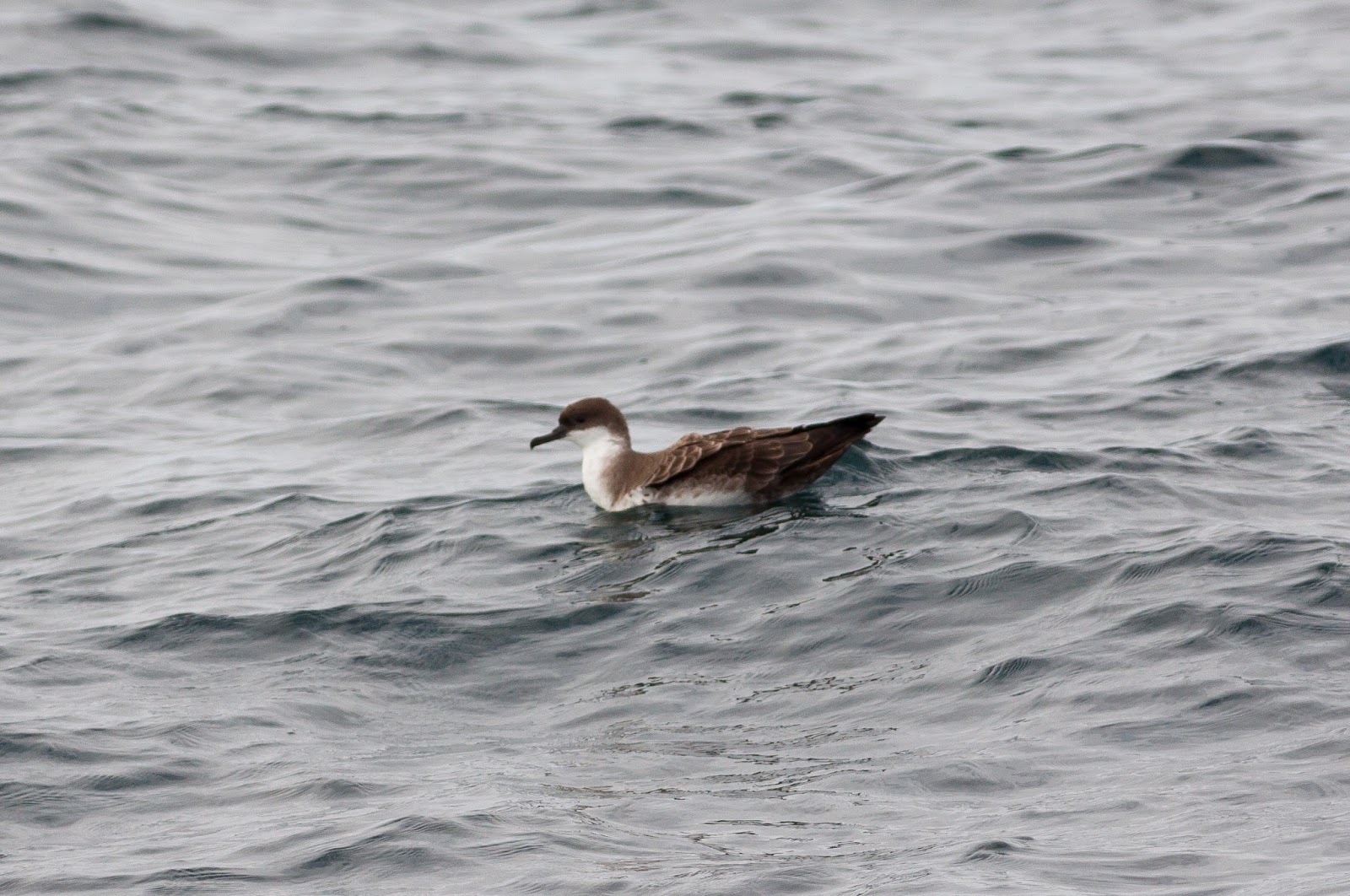
Scilly Pelagic Birding - Great Shearwaters put on a show (Day 3)

Monday dawned with beautiful weather yet again, and our hopes were high as we set off from Hugh Town at around 5pm. With (thankfully) no Wilson’s yet again on Sunday, this was our last chance to connect in what had so far been a disastrous year for sightings. With the previous latest sighting being the 17th July, no one was really sure what was causing the absence of birds, although one theory was that the seas were a touch too cold. Close fly-by views of Great Shearwaters yesterday had us hoping they would put in a repeat performance tonight, and luckily we weren’t disappointed.
Great Shearwater - Scilly
In a brilliant sequence of events unfolding over around 60 seconds, the call went out of a Bonxie sat on the sea, which the boat began to head towards. This plan was swiftly abandoned however, as a Sooty Shearwater zoomed past the side of the boat at close quarters. With everyone reaching for their cameras, a second shout 10 seconds later came from Scott of “Great Shearwater!” Having picked up his camera he had looked up expecting a Sooty Shearwater, but instead had laid eyes on a Great that had come out of nowhere! Fantastic!
Great Shearwater - Scilly
We watched for several minutes as this large shearwater gave several circuits of the boat (all thoughts of the Sooty were long forgotten by now!) and we took in the diagnostic dark cap, dark and white tail and the extremely dark upperparts. Much larger and agile than a Manx Shearwater, the difference in size and flight style was obvious, and the pale underwings with dark smudges were also clear to see.
Great Shearwater - Scilly
In total, we eventually had an estimated 5+ birds (told apart by the difference in pattern on the underwings) and several in particular gave absolutely breath-taking views, coming to within 7 metres of the boat (they were so close my lens wouldn’t focus!). One in particular kept diving below the surface right in front of us to feed on the fish remains thrown overboard – a behaviour I wasn’t aware of in Great Shearwaters. Everyone watched in awe as the bird performed spectacularly, making circuits around the boat and giving a show that none of us would forget in a hurry. What a way to see a lifer!
Great Shearwater - Scilly
Sadly as the light faded, we unfortunately just couldn’t make a Cory’s or Wilson’s materialise, and despite the best efforts of everyone on board, it just wasn’t to be this year!
Scilly Pelagics
Just a week later, 3 out of the 4 pelagics managed to connect with a Wilson’s, whilst the Sunday pelagic scored absolutely incredible views of a Fea’s Petrel soaring around the boat – the ultimate in pelagic birding and one which we will hopefully connect with on future trips! Whilst we had been a week too early for the Wilson’s, this may have been a blessing in disguise, as not booking on the Sunday pelagics would have resulted in heartbreak had we been there a week later and missed the Fea’s!

Checking past records, the second week in August has traditionally been the best for Wilson’s, with a 54% score rate, while Fea’s can turn up at pretty much any time. The fact that both this years and last years bird turned up within a couple of days difference between dates could indicate that anywhere around the 16th and 18th is ideal – boding well for next year’s trip falling between Monday the 15th and Saturday the 20th.

Exploring the islands on our final day before the ferry back gave us an opportunity to admire the subspecies of Speckled Wood found on the Scilly Isles (subsp Insula). Slightly more orange than our individuals on the mainland, whilst the difference is only slight, fluttering around the trees the butterflies were noticeably more orange. 
Speckled Wood (insula) - Scilly
We also got great views of a number of eels in the streams surrounding Lower Moors Nature Reserve- another new fish for me and a species I have been wanting to see for a good while.
Eel, Lower Moors
Eel, Lower Moors
Lower Moors itself is renowned for attracting a whole host of megas over the years, including a recent overwintering Northern Waterthrush and a Black and white Warbler found frequenting the lichen covered trees on the outskirts of the boardwalk trail! Whilst not as productive in recent years as in its heyday in the 80’s and 90’s, hopefully these beautiful islands can soon start producing the goods again in terms of mouth-watering American vagrants.
Lower Moors trees - once home to a Black and White Warbler
With next year’s trip already booked, fingers crossed that we are able to time it right to connect with Wilson’s next time around, and maybe even secure once in a lifetime views of that most mythical of petrels like the lucky few on the Sunday’s pelagic – bring on the Fea’s! 
St Mary's, Scilly