Male birds are 9 times out of
10 more striking than their duller female counterparts and Pine Buntings are no
different, with the bright coloured heads of the males a far cry from the drab
and often tricky females! Despite getting reasonable views of the Venus Pools
female in Shropshire earlier in January, the discovery of a fine male bird frequenting
the Dunnington hedgerows a few weeks ago saw us wanting to complete the Pine
Bunting set, and with a free Sunday we made the short journey over to Yorkshire
in the hopes of connecting.
Piney
Notoriously tricky birds to
successfully twitch as of late (the Kent bird has also been proving to be
elusive) several people had left unfulfilled having dipped the Dunnington bird
after hours of waiting, some even having missed out even when the bird had
shown due to the sightings being all too brief.
The assembled Pine Bunting crowd
Joining the crowd expecting a
lengthy wait and with hundreds of Yellowhammers constantly flitting in and out
of the hedge to search through, we were surprised when after just over half an
hour eagle eyed Alex expertly picked out our male Pine Bunting, having watched
the tiny bird fly in from afar. Perched in the silver birch trees in the hedge
before flying closer into the large oak tree on the right hand side of the
hedge north of the paddock, the strikingly marked bunting remained on view for
only a couple of minutes at max, just long enough to really study the
distinctive facial features and fire off a few record phonescoped shots, before
dropping down in to the hedge and out of sight.
True to its elusive nature, it
didn’t make a reappearance while we stayed on site and it wasn’t until late in
the afternoon that it came on view again – lucky I got up early otherwise we
would have had a very cold and unfruitful day!
With a bright white central
moustacial cheek, grey central crown stripe and rusty brown tones there was
certainly no mistaking this particular individual, and it was great to get a
good look at it perched still and unobscured, especially as the flock was
extremely flighty with birds coming and going on a constant basis. The flock
itself consisted of a mix of hundreds of Yellowhammers and Corn Buntings, with
a handful of Chaffinches, Bramblings and Tree Sparrows thrown in for good
measure – and it was good to see these farmland species were doing well here having
suffered large declines elsewhere.
After this autumn’s phenomenal
influx of Pine Buntings, it was only a matter of time before further wintering
birds were unearthed hiding amongst our British Yellowhammer flocks, and this
is a species that anyone has a chance of finding while searching through their
local wintering flocks. Indeed, with birds turning up on a weekly basis on the
European continent, there is a high possibility that more of these charming
little buntings will come to light in the next couple of months.
Remaining quite elusive, there
are certain areas where the Pine Bunting seems to show fairly reliably after a
wait. As of late, it has favoured the right hand hedgerow and oak tree as
viewed from the paddock, as well as the ground around the obvious fallen dead
tree and surrounding hedgerows a few fields to the right as viewed from the
public footpath to the east of the field.
The Dunnington hedgerow north of the paddock that the Pine Bunting is making its current home
With a prolonged spate of easterly winds over the past few weeks, it was only a matter of time before the eastern hotspot of Britain that is Spurn delivered once again, and true to form a fine Isabelline Wheatear was found at Easington on the 17th of the last month, hot on the heels of the first mainland British record of Siberian Accentor just a few days earlier.
With 36 past records of Isabelline Wheatear in Britain, despite becoming almost annual in recent years, they are still extremely rare birds, and having missed the Seaton Snook bird in Cleveland back in 2014, this was the first opportunity to catch up with one since on British soil. Luckily, the Easington bird stuck until the weekend (it was first found on a Monday – typical) and come a cold and blustery Saturday morning we were braving the biting nip of an easterly wind as we trudged along the field edge to catch up with our target bird. Thankfully, we didn’t have long to wait, as upon arrival the Wheatear was crouching in the grass relatively near to the fence line, offering great views through the scope before hopping up and heading further out in to the field.
Watching as it flitted and scurried over the bare soil of the adjacent ploughed field, we could take in all the features that distinguish Isabelline Wheatears from the similar Northern Wheatears we’re more accustomed to seeing in Britain – the white fore eyebrow as opposed to the buff colouration seen on Northern Wheatears, along with the black alula of the Isabelline that contrasts with the pale wing. The thick black band on the end of the tail was also apparent on the occasional instances when the bird flew, as were the paler upper wings (Isabelline actually means a pale creamy-brown fawn colour – which the Wheatear definitely was!).
The black alula contrasting with the pale wing...
...and the thick black band on the end of the tail
Normally occurring in the Middle-East, Russia and Northern Africa, with the prolonged easterlies, presumably originating from the depths of these areas and capturing birds on migration, there has since been a slight invasion of Isabelline Wheatears, with a whopping further 6 birds found over the course of a couple of weeks.
The field the Isabelline Wheatear was favouring
Whilst not the brightest of species, or indeed, individual, never the less this was a much welcome bird and a great autumnal Wheatear to catch up with.
Siberian Accentor in Britain – the stuff
birding dreams are made of.
There are some birds that
instantly send your mind in to absolute chaos and panic when flashing up as an
alert – Black-billed Cuckoo was one, Short-toed Eagle another (Wallcreeper I
imagine will be another should one ever alight on a south coast cliff). And so it was the case at 3pm on Thursday afternoon when “Siberian Accentor – Easington,
Yorkshire. One by the school.” popped up on my phone on the back of a mega
alert.
Hot on the heels of the first for Britain found on Shetland just 4 days
earlier (which sent the entire birding community in to a spin at the time),
miraculously, lightning had struck twice and a small piece of Russian gold had
now made landfall on mainland Britain, making itself available for the masses
to twitch and a relief for those who just don’t have the time or funding to nip
off to Shetland for a day every time a good bird breaks.
Headless chicken mode soon
ensued, along with the agonising realisation that with dusk now at around 6pm,
a plane at the very least would be required to make the 3+ hour journey to get us there before dark
after work. With the bird showing well down to a matter of feet for the rest of
the day, all we could do was sit and watch as the tear-inducing close up photos
flooded social media that evening (this bird must surely now win the award for
most photographed Siberian Accentor of all time!)
Sleepless nights followed
(including bizarre panic induced dreams consisting of Siberian Accentors being
sliced up, roasted and served on a plate?!) – and with no records of Siberian
Accentor in Britain before last week and very few in Western Europe before this
autumn, the chances of any more occurring after this year’s remarkable invasion
were very very remote indeed….
The famous skip the Easington Siberian Accentor liked to hang out next to!
As expected, the crowds on
Friday and Saturday morning were huge (it was almost a first for Britain after
all), with birders photographed queuing up around Easington gas terminal in
their hundreds way before even the twinkling of first light approached. Not
quite as certain however, but hoped for by thousands, was that the Siberian
Accentor was miraculously still present each day – it was - game on!
Luckily the bird turning up on
a Thursday meant the agony of work was limited to just Friday, and we were soon
well on our way to Easington, news that it was still there making it a
much more relaxed affair than usual – with Siberian Accentors being night-time
migrants and the bird being completely settled feeding on the same drive, the likelihood
of it doing a bunk was slim.
With the dawn masses having
already been and gone, we arrived on site to just a small handful of birders
(less than 100 lined up along the fence) and we were soon gazing at this part
of British birding history – one Siberian Accentor happily feeding amongst the
gravel and leaves on someone’s drive right in front of us.
Surreal.
With the stress of seeing the
bird now lifted, we could truly enjoy this Siberian wonder, and we watched on
for around 45 minutes as it bumbled around in front of us, often coming to
within 3 metres and providing out of this world views of what can be a
difficult species to see anywhere in the world (never mind Britain!), completely oblivious to the
absolute fuss and excitement its arrival had caused on the British birding
scene.
Occasionally associating with
one of the many Dunnocks also feeding on the drive, the difference between the
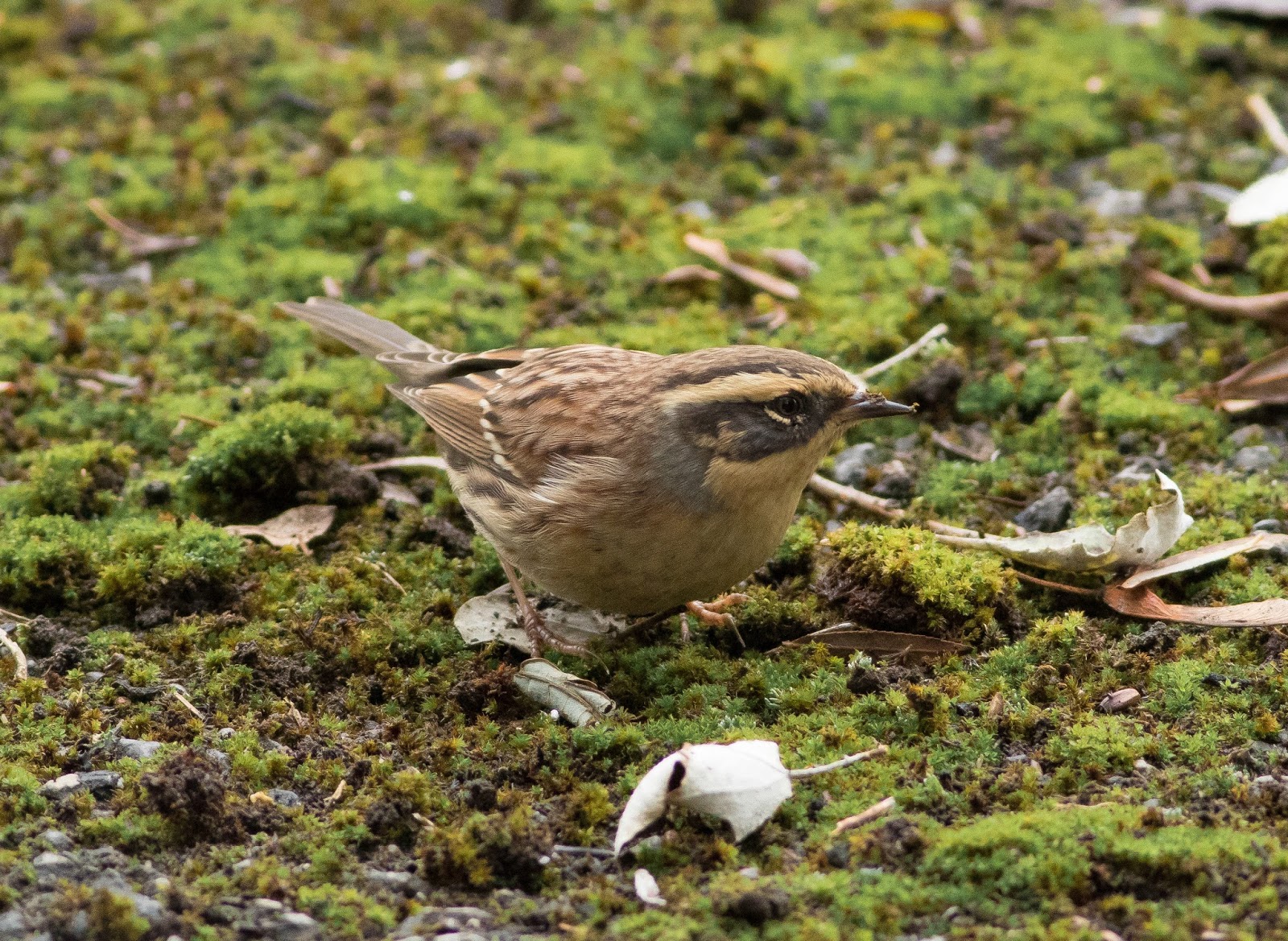
two species was clear, the Siberian Accentor having its face dusted with gold
and looking particularly smart wearing its tiny black and gold mask. An
exceptionally classy looking bird and a very special visitor indeed.
The Siberian Accentor and Dunnock together
The gorgeous head stripe patterns!
Of course, Siberian Accentor
as an addition to the British list was one of the most widely predicted and
anticipated firsts for Britain of all time. An absolutely unprecedented influx
of birds making landfall across Western Europe (Sweden holding 16 alone) and
with individuals located in Latvia, Germany, Finland, Lithuania, Denmark and
Poland, it was only a matter of time before these Russian strays found
themselves on British soil. Indeed, in an incredible sequence of events, a
further 4 individuals (possibly 6) have been found in the UK since (one in
Cleveland, one in Durham, one on Lindisfarne, one on Fair Isle and two possibles in Northumberland and Lothian) bringing the total
of European birds now up to over a staggering 100 individuals and counting.
Monday's Birdguides reports - I didn't think we'd ever see the day that three separate British Siberian Accentors were all reported within minutes of each other!!
With the continuous easterly
winds, this number is surely only set to grow, and it is now really a question
of when and where, not if, the next British record of the autumn will occur.
Peekaboo - Siberian Accentor trying to hide...
With Siberian Accentors
breeding in Northern Siberia on either side of the Ural mountains, and normally
migrating south east to Asia for the winter, the past number of records in
Europe before this autumn were very few and far between, the majority being in
Sweden. The reason for this mass influx to Western Europe is unclear – although
the most likely explanation is possibly a case of a successful breeding season
in Russia combined with unrelenting easterly winds originating from Siberia for
such a prolonged period of time, coinciding with their migration movements. A
system of high pressure over Scandinavia will also have blocked the usual
westerly Atlantic weather fronts that normally pose a barrier to travellers from the
east.
The high pressure system over Scandinavia and easterly winds from Russia that are likely to have brought the Siberian Accentor influx to Britain
It is also possible that something else may be at play to cause such a mass influx of what was, until this October, an extremely infrequent visitor to Western Europe - perhaps an ecological event taking place in the Siberian Accentor's home range or a freak weather system displacing individuals en-masse.
Alex's great little video of the Accentor happily feeding away
With no telling as to whether
an influx of Siberian Accentors on this scale will ever happen again, it may
well be the case that certainly in my life time at least, these golden Dunnocks
may not grace British shores again. A truly special bird (and possibly one of
the most awe-inducing I’ve seen in Britain) I for one am exceptionally glad
that we, along with thousands of other birders, got to witness this little
piece of golden birding history. Siberian magic indeed.
With easterly winds dominating the weather over the past couple of weeks, we couldn't not enjoy two weekends on the bounce at one of the premier birding locations mainland Britain has to offer - Spurn in East Yorkshire. Scouring the bushes, hedgerows and trees on the hunt for Siberian Rubythroats, White's Thrushes or *insert desired mega here*, whilst we didn't strike it lucky on that front, we nevertheless had an enjoyable few days lapping up the huge number of eastern waifs
that had arrived on our shores.
Dusky Warbler
Rustic Bunting
Without doubt, the highlight of the first weekend was most definitely a fine Rustic Bunting, originally trapped and ringed at Kew
Villa on the Thursday and being seen intermittently in Church Field the
following days. A relatively rare visitor, and with there not having been a
twitchable one for a good number of years, it was great to jam in on this
eastern bunting.
Perching up on several trees
scattered around the field through the course of around 45 minutes, we were
able to get great views as it showed off to the crowds!
Birders on the hunt for the Rustic Bunting in Church Field
Very similar to a Reed Bunting
in winter plumage, the rusty red-brown flanks, neck and rump of the Rustic were
obvious, even in flight, while the white facial spot and white wing bars
(yellow-brown in Reed Buntings) also offered a handy way of separation.
The diagnostic white facial spot
The Heligoland trap in Church Field the Rustic Bunting was first trapped in
Spurn always seems to deliver,
and along with the Rustic Bunting, we had a handful of Yellow-browed Warblers,
several Redstarts, two Red-breasted Flycatchers, a nice Ring Ouzel, an Olive-backed Pipit, masses of
Redwings and Goldcrests, a particularly showy Woodcock on the beach and a gorgeous Firecrest flitting through the hedges.
Poor record shot of the Firecrest!
Olive-backed Pipit
Having had our fill of the gorgeous little Siberian Accentor at Easington the following weekend on our second visit to East Yorkshire (that little gem gets a whole blog post to itself), we headed over to finish the day at Spurn once again, a confiding Dusky Warbler on canal bank my second lifer of the trip.
With Dusky Warbler a predominately east coast bird, this had been on my radar for a good while, and it was great to finally catch up with one after relatively few records in previous years.
A supporting cast of Pallas’s and Yellow-browed Warblers, Firecrests, Bramblings, a Woodcock and a Black Redstart were certainly not to be sniffed at, while an extremely confiding Shore Lark was also most definitely another highlight of the weekend, these Bumblebee pattered larks a firm favourite of mine.
The sheer spectacle of ongoing migration at Spurn was also a display in itself, the bushes dripping with Goldcrests while every hedgerow, field and patch of grass held masses of Robins and thrushes fresh in off the sea.
I can never get a decent photo of a Firecrest!!
A great couple of weekends at what is truly one of the best migration hotspots in Britain, and it was fantastic to see the spectacle of autumn migration on the east coast in action.