A tale of nature, wildlife and birding from Cheshire, North Wales and across the globe....

A tale of nature, wildlife and birding from Cheshire, North Wales and across the globe....
Showing posts with label Shore Lark. Show all posts

Thursday, 20 October 2016

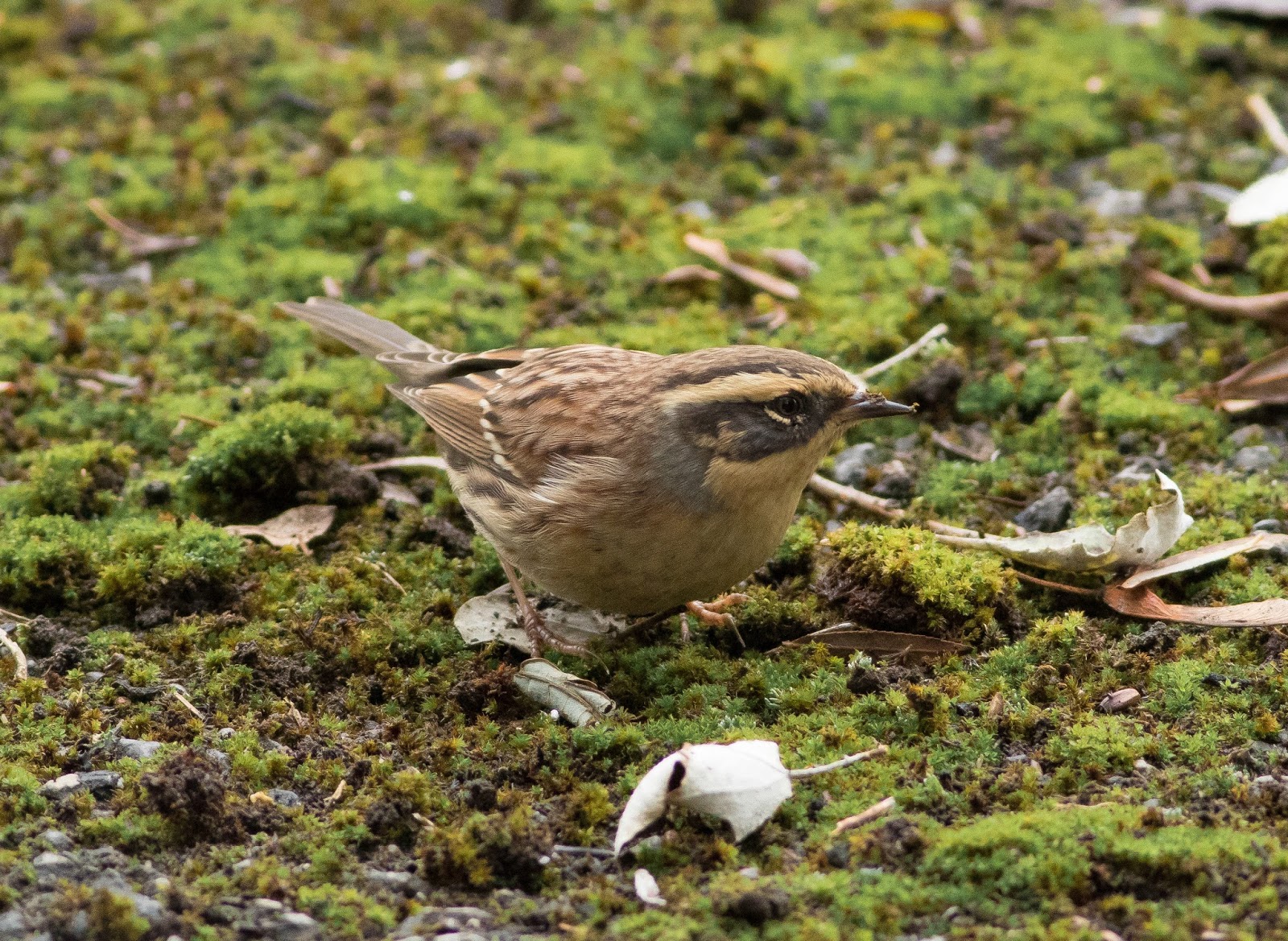
Birding Gold – Siberian Accentor at Easington, Yorkshire – MEGA!!

Siberian Accentor in Britain – the stuff birding dreams are made of.

There are some birds that instantly send your mind in to absolute chaos and panic when flashing up as an alert – Black-billed Cuckoo was one, Short-toed Eagle another (Wallcreeper I imagine will be another should one ever alight on a south coast cliff). And so it was the case at 3pm on Thursday afternoon when “Siberian Accentor – Easington, Yorkshire. One by the school.” popped up on my phone on the back of a mega alert. 
Siberian Accentor - Easington, Yorkshire
Hot on the heels of the first for Britain found on Shetland just 4 days earlier (which sent the entire birding community in to a spin at the time), miraculously, lightning had struck twice and a small piece of Russian gold had now made landfall on mainland Britain, making itself available for the masses to twitch and a relief for those who just don’t have the time or funding to nip off to Shetland for a day every time a good bird breaks. 

Headless chicken mode soon ensued, along with the agonising realisation that with dusk now at around 6pm, a plane at the very least would be required to make the 3+ hour journey to get us there before dark after work. With the bird showing well down to a matter of feet for the rest of the day, all we could do was sit and watch as the tear-inducing close up photos flooded social media that evening (this bird must surely now win the award for most photographed Siberian Accentor of all time!)

Sleepless nights followed (including bizarre panic induced dreams consisting of Siberian Accentors being sliced up, roasted and served on a plate?!) – and with no records of Siberian Accentor in Britain before last week and very few in Western Europe before this autumn, the chances of any more occurring after this year’s remarkable invasion were very very remote indeed….
Easington, Yorkshire
The famous skip the Easington Siberian Accentor liked to hang out next to!
As expected, the crowds on Friday and Saturday morning were huge (it was almost a first for Britain after all), with birders photographed queuing up around Easington gas terminal in their hundreds way before even the twinkling of first light approached. Not quite as certain however, but hoped for by thousands, was that the Siberian Accentor was miraculously still present each day – it was - game on!

Luckily the bird turning up on a Thursday meant the agony of work was limited to just Friday, and we were soon well on our way to Easington, news that it was still there making it a much more relaxed affair than usual – with Siberian Accentors being night-time migrants and the bird being completely settled feeding on the same drive, the likelihood of it doing a bunk was slim.

With the dawn masses having already been and gone, we arrived on site to just a small handful of birders (less than 100 lined up along the fence) and we were soon gazing at this part of British birding history – one Siberian Accentor happily feeding amongst the gravel and leaves on someone’s drive right in front of us.

Surreal.
Siberian Accentor - Easington, Yorkshire
With the stress of seeing the bird now lifted, we could truly enjoy this Siberian wonder, and we watched on for around 45 minutes as it bumbled around in front of us, often coming to within 3 metres and providing out of this world views of what can be a difficult species to see anywhere in the world (never mind Britain!), completely oblivious to the absolute fuss and excitement its arrival had caused on the British birding scene.
Siberian Accentor - Easington, Yorkshire
Occasionally associating with one of the many Dunnocks also feeding on the drive, the difference between the two species was clear, the Siberian Accentor having its face dusted with gold and looking particularly smart wearing its tiny black and gold mask. An exceptionally classy looking bird and a very special visitor indeed.
Siberian Accentor and Dunnock - Easington, Yorkshire
The Siberian Accentor and Dunnock together
Siberian Accentor - Easington, Yorkshire
The gorgeous head stripe patterns!
Siberian Accentor - Easington, Yorkshire
Of course, Siberian Accentor as an addition to the British list was one of the most widely predicted and anticipated firsts for Britain of all time. An absolutely unprecedented influx of birds making landfall across Western Europe (Sweden holding 16 alone) and with individuals located in Latvia, Germany, Finland, Lithuania, Denmark and Poland, it was only a matter of time before these Russian strays found themselves on British soil. Indeed, in an incredible sequence of events, a further 4 individuals (possibly 6) have been found in the UK since (one in Cleveland, one in Durham, one on Lindisfarne, one on Fair Isle and two possibles in Northumberland and Lothian) bringing the total of European birds now up to over a staggering 100 individuals and counting.
Birdguides Report - Siberian Accentor
Monday's Birdguides reports - I didn't think we'd ever see the day that three separate British Siberian Accentors were all reported within minutes of each other!!
With the continuous easterly winds, this number is surely only set to grow, and it is now really a question of when and where, not if, the next British record of the autumn will occur.
Siberian Accentor - Easington, Yorkshire
Peekaboo - Siberian Accentor trying to hide...
With Siberian Accentors breeding in Northern Siberia on either side of the Ural mountains, and normally migrating south east to Asia for the winter, the past number of records in Europe before this autumn were very few and far between, the majority being in Sweden. The reason for this mass influx to Western Europe is unclear – although the most likely explanation is possibly a case of a successful breeding season in Russia combined with unrelenting easterly winds originating from Siberia for such a prolonged period of time, coinciding with their migration movements. A system of high pressure over Scandinavia will also have blocked the usual westerly Atlantic weather fronts that normally pose a barrier to travellers from the east. 
Windytv
The high pressure system over Scandinavia and easterly winds from Russia that are likely to have brought the Siberian Accentor influx to Britain
It is also possible that something else may be at play to cause such a mass influx of what was, until this October, an extremely infrequent visitor to Western Europe - perhaps an ecological event taking place in the Siberian Accentor's home range or a freak weather system displacing individuals en-masse. 
Alex's great little video of the Accentor happily feeding away

With no telling as to whether an influx of Siberian Accentors on this scale will ever happen again, it may well be the case that certainly in my life time at least, these golden Dunnocks may not grace British shores again. A truly special bird (and possibly one of the most awe-inducing I’ve seen in Britain) I for one am exceptionally glad that we, along with thousands of other birders, got to witness this little piece of golden birding history. Siberian magic indeed. 
Siberian Accentor - Easington, Yorkshire

Wednesday, 19 October 2016

The Best of Autumn Birding at Spurn - Rustic Bunting, Dusky Warbler, Shore Lark and more!

With easterly winds dominating the weather over the past couple of weeks, we couldn't not enjoy two weekends on the bounce at one of the premier birding locations mainland Britain has to offer - Spurn in East Yorkshire. Scouring the bushes, hedgerows and trees on the hunt for Siberian Rubythroats, White's Thrushes or *insert desired mega here*, whilst we didn't strike it lucky on that front, we nevertheless had an enjoyable few days lapping up the huge number of eastern waifs that had arrived on our shores.
Dusky Warbler - Spurn, Yorkshire
Dusky Warbler
Rustic Bunting - Spurn, Yorkshire
Rustic Bunting
Without doubt, the highlight of the first weekend was most definitely a fine Rustic Bunting, originally trapped and ringed at Kew Villa on the Thursday and being seen intermittently in Church Field the following days. A relatively rare visitor, and with there not having been a twitchable one for a good number of years, it was great to jam in on this eastern bunting.
Rustic Bunting - Spurn, Yorkshire
Perching up on several trees scattered around the field through the course of around 45 minutes, we were able to get great views as it showed off to the crowds!
Rustic Bunting - Spurn, Yorkshire
Church Field - Spurn
Birders on the hunt for the Rustic Bunting in Church Field
Very similar to a Reed Bunting in winter plumage, the rusty red-brown flanks, neck and rump of the Rustic were obvious, even in flight, while the white facial spot and white wing bars (yellow-brown in Reed Buntings) also offered a handy way of separation.
Rustic Bunting - Spurn, Yorkshire
The diagnostic white facial spot
Church Field Heligoland trap - Spurn
The Heligoland trap in Church Field the Rustic Bunting was first trapped in
Spurn always seems to deliver, and along with the Rustic Bunting, we had a handful of Yellow-browed Warblers, several Redstarts, two Red-breasted Flycatchers, a nice Ring Ouzel, an Olive-backed Pipit, masses of Redwings and Goldcrests, a particularly showy Woodcock on the beach and a gorgeous Firecrest flitting through the hedges. 
Woodcock - Spurn, Yorkshire
Firecrest - Spurn, Yorkshire
Poor record shot of the Firecrest!
Olive-backed Pipit - Easington, Yorkshire
Olive-backed Pipit
Having had our fill of the gorgeous little Siberian Accentor at Easington the following weekend on our second visit to East Yorkshire (that little gem gets a whole blog post to itself), we headed over to finish the day at Spurn once again, a confiding Dusky Warbler on canal bank my second lifer of the trip. 
Dusky Warbler - Spurn, Yorkshire
With Dusky Warbler a predominately east coast bird, this had been on my radar for a good while, and it was great to finally catch up with one after relatively few records in previous years.
Dusky Warbler - Spurn, Yorkshire
A supporting cast of Pallas’s and Yellow-browed Warblers, Firecrests, Bramblings, a Woodcock and a Black Redstart were certainly not to be sniffed at, while an extremely confiding Shore Lark was also most definitely another highlight of the weekend, these Bumblebee pattered larks a firm favourite of mine. 
Shore Lark - Spurn, Yorkshire
The sheer spectacle of ongoing migration at Spurn was also a display in itself, the bushes dripping with Goldcrests while every hedgerow, field and patch of grass held masses of Robins and thrushes fresh in off the sea.
Firecrest - Spurn, Yorkshire
I can never get a decent photo of a Firecrest!!
A great couple of weekends at what is truly one of the best migration hotspots in Britain, and it was fantastic to see the spectacle of autumn migration on the east coast in action. 

Monday, 22 February 2016

Norfolk Birding - Shore Larks, Rough-legged Buzzards, Bean Geese and the Golden Pheasant of Wolferton

Me and Alex decided to take a New Year’s trip to Norfolk in order to catch up with all the birding goodies that were on offer in what is surely one of the most productive of counties for birds. With a wealth of species concentrated in a small area near Kings Lynn, we had three days to connect with an impressive line-up of great birds.

Staking out Flitcham that afternoon for the resident Pallid Harrier unfortunately drew a blank (although we had already seen an individual last autumn in Somerset) but we were rewarded with a beautiful flock of feeding Bramblings, a hunting Merlin and a pair of gaudy Egyptian Geese as consolation prizes.
Brambling, Flitcham
Phone-scoped shot of one of the Bramblings
The next day saw an early rise and the obligatory trip to the now famous Wolferton Triangle in order to catch up with the resident Lord of the Estate – the legendary Golden Pheasant himself, before heading over to Choseley Drying Barns to try and spot one of the two Rough-legged Buzzards that have been calling this area home. 
Golden Pheasant, Wolferton Triangle
After eventually finding the right location and after a fair bit of driving and scanning fields, I managed to pick out a pale coloured Buteo heading over the ridge with pronounced black carpal patches and a white upper tail – our target bird.

Enjoying brief views, we drove over to the field in question and after some careful scanning, I picked up our sought after Buzzard, this time perched in the field next to us. Taking flight and being harassed by two persistent crows, we both got excellent views as this majestic raptor flew along the edge of the field, the white inner tail above distinctive along with the much paler wings and characteristic markings.

With the Rough-legged Buzzard now out of sight and perched in a distant tree, we headed over to Cley for our final stop of the day in an attempt to catch up with one of the four Bean Geese that had been present on the reserve associating with the regular Pink Feet. Travelling past many farm fields, it was a refreshing change to see coveys of both Grey and Red-legged Partridges in large numbers as we drove through Norfolk, with both species being plentiful.
Grey Partridges, Norfolk
Arriving at Cley, we immediately locked on to a Barn Owl gracefully quartering the reeds in the afternoon sun, while several Marsh Harriers patrolled the reserve.  Entering the hides, the Bean Geese were extremely difficult to pick out amongst the large flock of Pink Feet, and after some careful scanning it wasn't until the other birders in the next hide along pointed them out to me that I was able to pick them out. Extremely similar to Pink Footed Geese, the good views really enabled us to note the subtle differences - their orange bills really stood out from the pink bills of the Pink Feet. Having only ever seen one Bean Goose before at Telford a few years ago, this was a great opportunity to really get my eye in on these two confusion species.
Bean Geese, Cley
Two orange billed Bean Geese interspersed with the Pink Feet
A quick check on the fields further up the track resulted in us also trying to pick out the Black Brant that had been present in the Brent goose flock for several weeks. Alex eventually managed to pick it up in what was becoming fast fading light, and we both admired this attractive American subspecies - my first in the UK. 
Black Brant, Cley
Black Brant, Cley
Differing from our Brent Geese by sporting a complete white neck collar and having much bolder white markings on the sides, once we had our eye in we could easily pick out this American stray amongst the hundreds of Dark-bellied Brents
Dark-bellied Brent Geese, Cley
The Dark-bellied Brent Geese - Black Brant at the bottom left!
With the light now disappearing, we headed back to the hotel for a feast of pizza and pasta before our final day in Norfolk and what would be our first birds of 2016. 

With New Year’s Day dawning and just one full day left, we decided to head over to Thornham Harbour where 3 Shore Larks had been present on the shingle beach next to the estuary mouth. One of my favourite small shore birds and a species I don’t often come across in the North West, I was keen to catch up with these delightful Bumble Bee patterned larks.

Stopping to admire the flock of around 30 Twite that had been feeding amongst the salt marsh plants right next to the car park and giving excellent views, we headed off in to the dunes to locate the Shore Larks.

With an ever present stream of New Year’s Day birders having scopes set up watching the birds, they weren't hard to find, and we were soon enjoying close views as the three birds fed along the tide line in the debris washed up by the waves.
Shore Lark, Thornham Harbour
Having only ever seen the Rossall Point bird last winter, it was great to admire these brightly coloured birds as they went about their business and it was a fantastic end to what had been a hugely successful trip to Norfolk.