Our final day in Michigan dawned for the first time in the holiday gloomy and overcast, with a light hint of drizzle threatening to oversee proceedings. Staying in Detroit with our flight home later that afternoon, we only had a few hours left to play with, so opted to head over to Lake Lansing, an hour or so to the west. Having missed Sedge Wren earlier in the trip and with this species restricted in range to the eastern part of America, we were keen to connect before we left, as after 3 visits to the east coast we had no immediate plans to return to this half of the US any time soon.
The boardwalk at Lake Lansing
Upon arriving at the car park, for the first time all trip dressed in coats and trousers, we immediately made our way on to a short stretch of boardwalk covering a large patch of reeds. A calling Yellowthroat added a touch of brightness in the cloudy gloom, while a Swamp Sparrow busied itself in the reed stems, more than likely feeding young nearby.
Yellowthroat
Swamp Sparrow
Almost immediately the distinctive song of a Sedge Wren struck up deep in the reedbed, and after a patient wait we were soon enjoying point blank views as one posed obligingly on a stem in front of us, singing its heart out for a good length of time.
Sedge Wren
With the pressure off relatively early on, this meant we could now focus on the presence of rails that were hiding deep in the reeds, the odd call here and there betraying their whereabouts. Getting in to position next to a promising patch of reeds that opened up in to a small water channel, we struck it lucky when a Sora dashed out in front of us, crossing under the boardwalk several times and providing good unobscured views of this normally secretive rail.
Sora
Sadly, the many Virginia Rails shrieking in the reedbed were not quite as amenable, the closest bird sadly pushed back in to the reeds by two dogs crossing the boardwalk moments before it emerged out in to the open, denying us any views of this shy bird on the deck.
Virginia Rails were calling incessantly from this patch of reeds.... but no sign!
With time ticking on we had one last stop at the Purple Martin colony across the road, these tiny purple wonders providing an acrobatic display above our heads, before heading back to Detroit in good time ready for our flight back to Manchester.
Purple Martins
The Purple Martin nesting box
We also stumbled on a good few Wild Turkeys during the trip
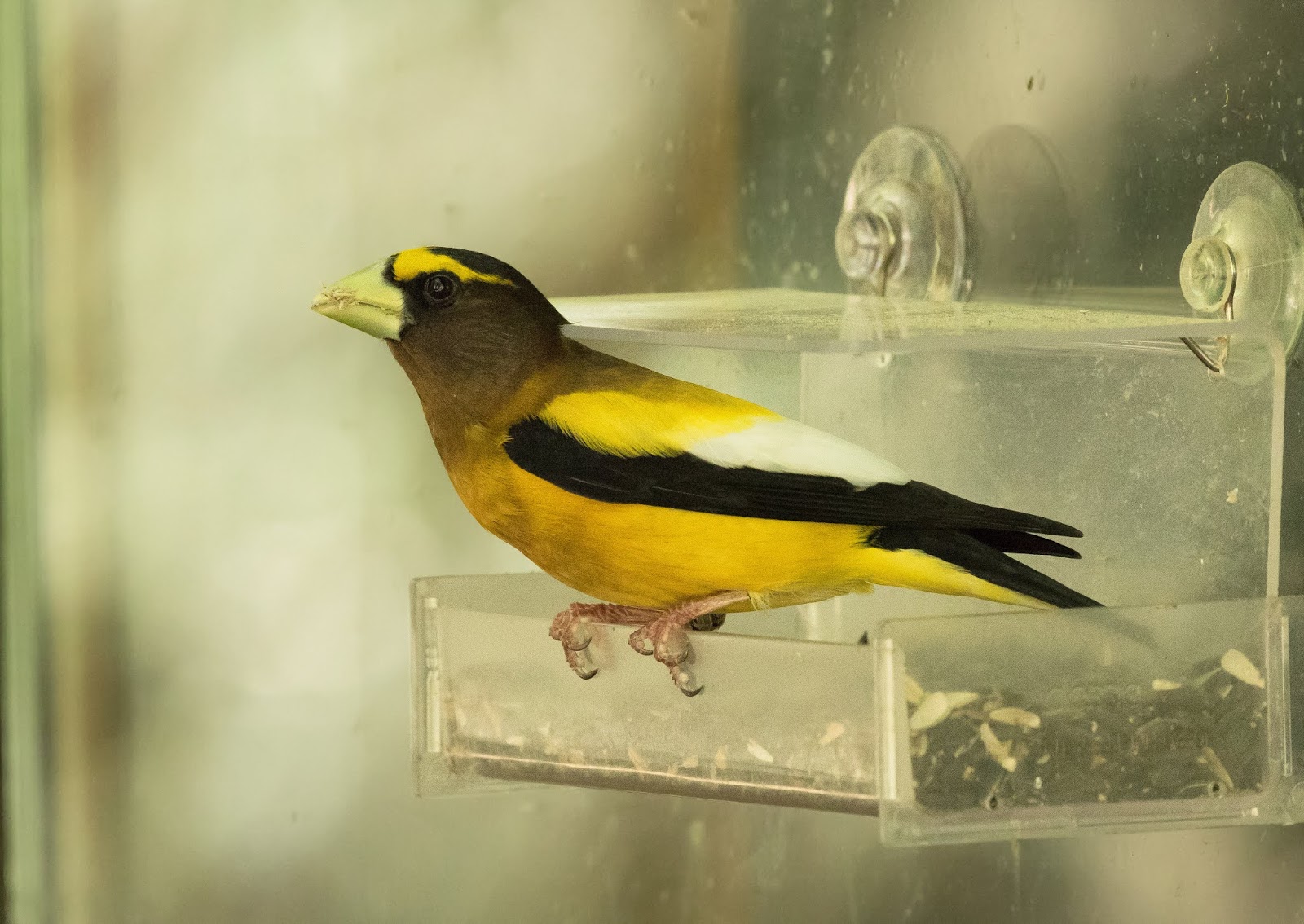
With the majority of our key targets under our belt, particularly in the Lower Peninsula, our trip to Michigan had been an overall success, with singing male Kirtland’s Warblers and male Evening Grosbeaks at the feeders particular highlights.
Kirtland's Warbler
Evening Grosbeak
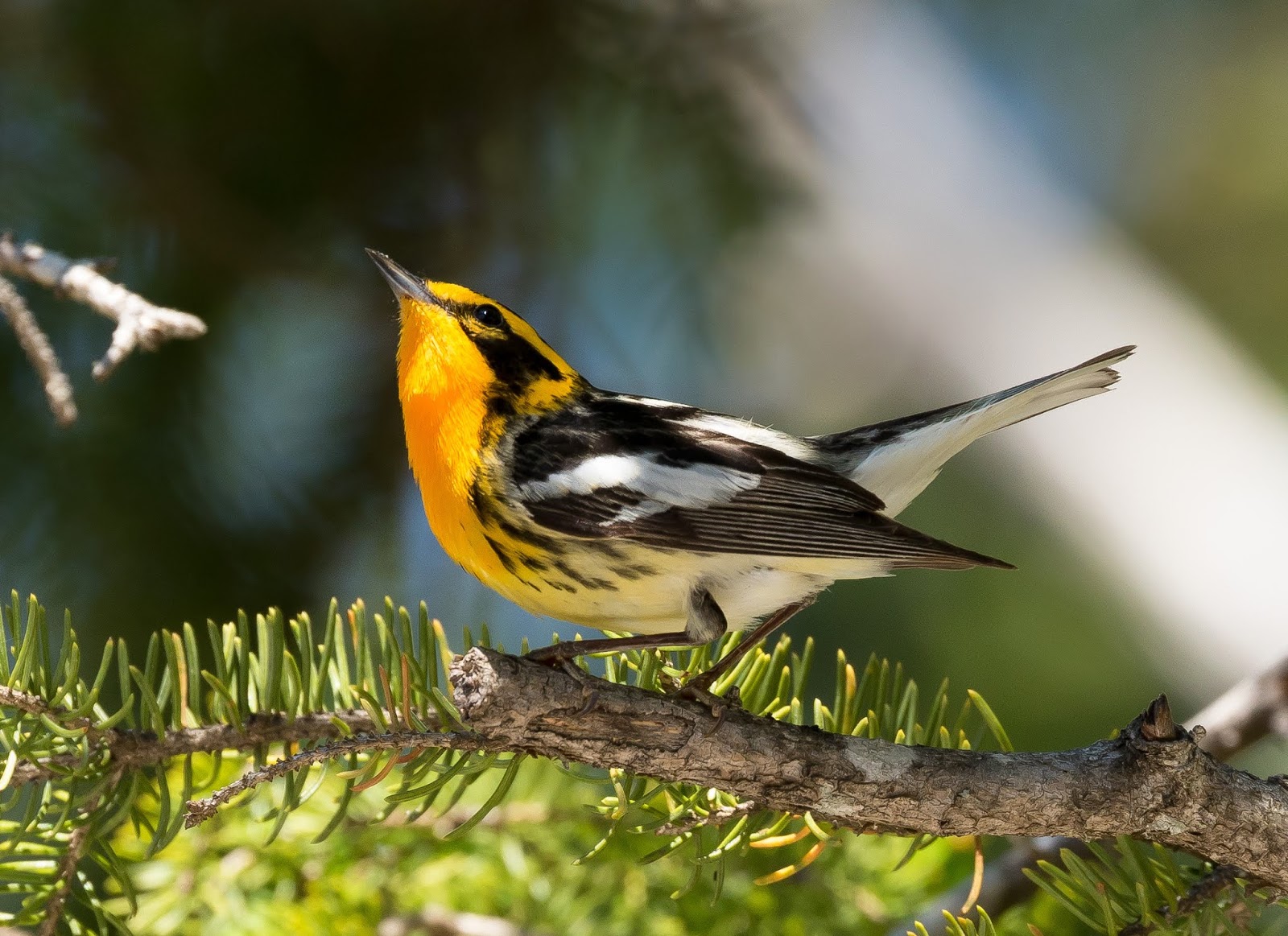
American birding in the spring is always going to deliver an eye-popping smorgasbord of brightly coloured warblers in all their glory, and Michigan certainly didn’t disappoint, notching up 19 species of warbler during our stay.
Blackburnian Warbler
Golden-winged Warbler
Chestnut-sided Warbler
With the picturesque Great Lakes and sprawling forests a sight to behold, we had thoroughly enjoyed our time in America once again, and a trip to the young Jack Pine plantations of Grayling for Kirtland’s Warblers on territory is highly recommended for anyone looking to complete the American warbler set.
Alex's great video showcasing some of our Michigan highlights
Leaving Grayling behind and heading much further south in to Washtenaw and Jackson counties, our main targets for the day were some of the grassland loving birds found at Sharonville SGA. Arriving on site and checking out the eastern most car park first, we were immediately met with the distinctive song of a male Dickcissel, starting off distant but soon coming in to the trees surrounding the car park.
Dickcissel
Achieving good views as it flitted from perch to post, our attention was soon captured by a small brown bird perched on a nearby fence wire. Needing several species of sparrow still for the trip, further scrutiny into the markings as well as the large head and bill shape revealed it to be a Grasshopper Sparrow, one of our main targets for the day and what transpired to be our only bird of the trip.
Grasshopper Sparrow
Like the Bobolink, Grasshopper Sparrows are sadly also in decline across the states, the population declining by 68% in recent years due to the loss of traditional grassland habitats.
With nothing else of note bar a Great Blue Heron drifting over the distant treetops, we headed west to the Wildlife Management Area, a hotspot for our next target bird and another grassland specialist – the Henslow’s Sparrow. A shallow puddle at the side of the road on our way in produced a number of House Finches and Chipping Sparrows quenching their thirst, while a pair of Turkey Vultures paraded on the gravel in front of us scavenging a number of titbits left behind.
Sparrow habitat at Sharonville SGA
This Groundhog popped its head up for a few moments to check us out
A short burst of song amongst the long grass soon alerted us to our second Field Sparrow of the trip, much showier than the bird seen in Grayling and providing point blank views outside the car window as it sang.
Field Sparrow
After a short time, a distinctive short wheezing song struck up in a patch of weeds nearby, and it wasn’t long until we had located the subtle yet beautiful olive green head tones of our sought after Henslow’s Sparrow.
Henslow's Sparrow
Another grassland species in decline, we had fantastic views as it clambered acrobatically in the weeds, briefly joined by a second bird as it performed.
With our targets secured at Sharonville, we stopped off to explore nearby Watkins Lake, but with it becoming quickly apparent that no Willow Flycatchers were playing ball here, we made the short journey north to another flycatcher hotspot – Nan Weston Nature Preserve – just as the skies darkened and the heavens opened.
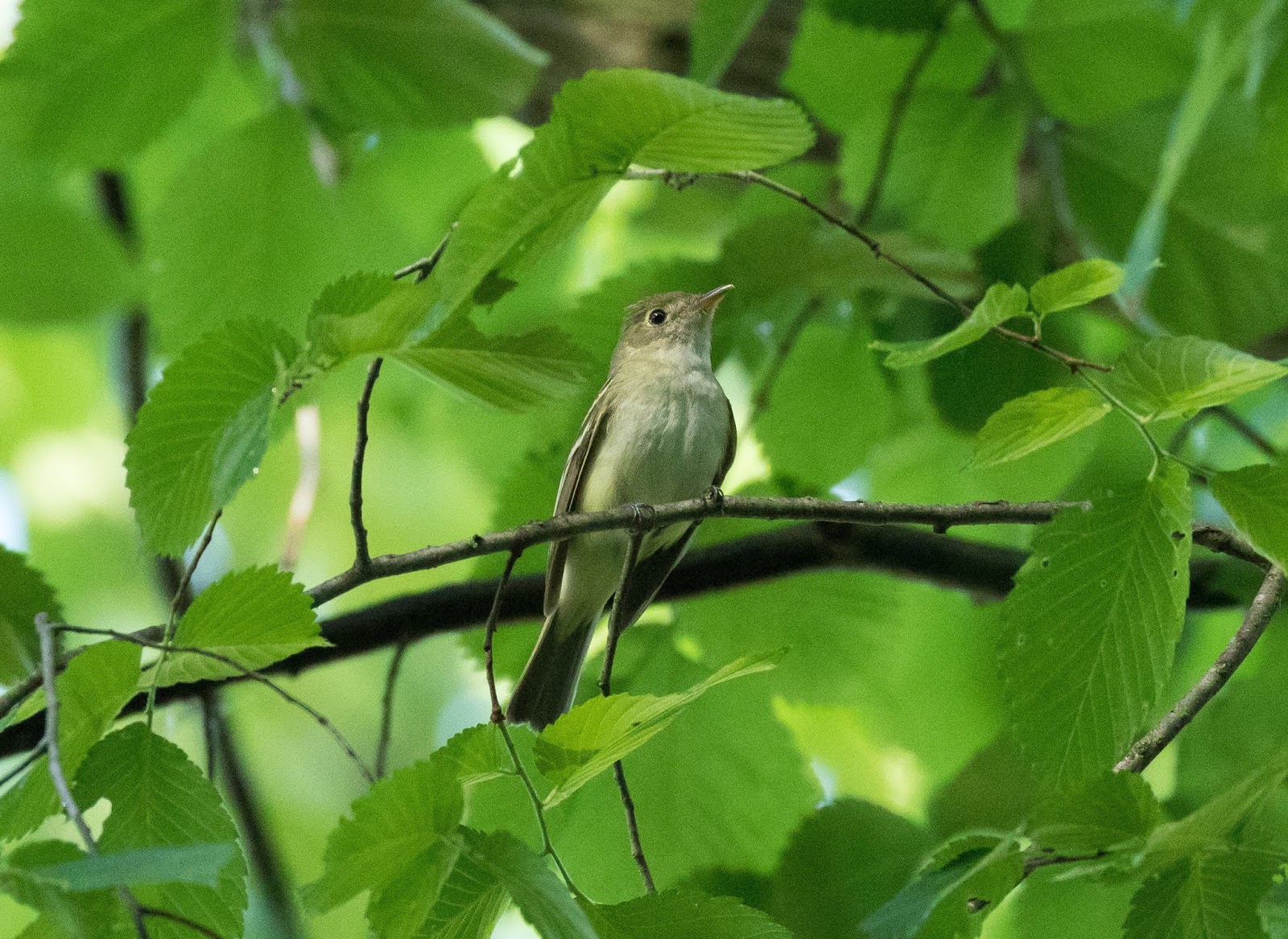
Sheltering in the car until the thunder subsided, the change in weather undoubtedly helped our cause, as no sooner had we stepped out of the car as the last drops of rain fell than our ears were met with the loud explosive calls of an Acadian Flycatcher, circling the car park and calling from various exposed branches.
Acadian Flycatcher
With a distinctive call, yellowish colouration and bold white wingbars, Acadian Flycatchers are one of the easier empids to ID, and we had great views as it remained on show for the next half hour.
The break in the weather had clearly brought the birds out, as several woodpeckers joined in the action in the form of both Red-bellied and Downy, while a tiny Ruby-throated Hummingbird hovering daintily and visiting the flowers carpeting the woodland floor was an unexpected and enchanting highlight – buzzing from petal to petal like a forest fairy as it gathered essential nectar.
The car park at Nan Weston
With the rain looking set to return and with all our targets bar the Willow Flycatcher secured, we called it a day and headed in to Detroit for our penultimate evening, filling up on more sizzling chicken and mushrooms at Applebees after a successful day in the field.
The American Robin that made its home at the hotel in Detroit offered excellent views in the car park