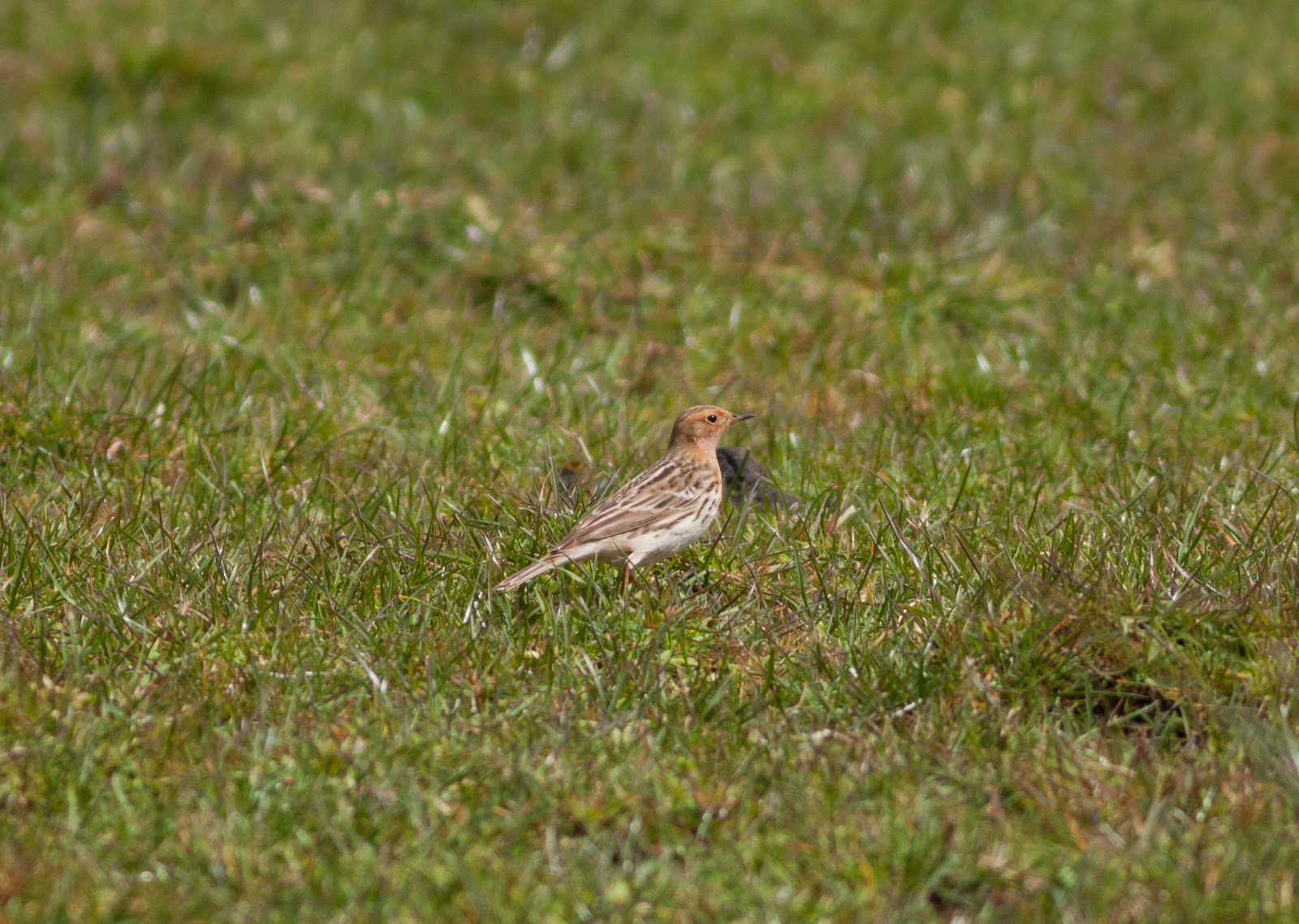
With an alert popping up
mid-morning on the Sunday telling us there was a Red-throated Pipit showing in
a field up near Manchester on Ludworth Moors, it was a no brainer to take the
trip to try and catch up with this local mega, hoping it would stay the course
and remain loyal to the site for the rest of the day.
With records usually emanating
from the Scilly Isles or as flyover individuals, Red-throated Pipits are
notoriously hard to twitch, so it was all systems go heading down the motorway!
Usually less than an hour from my house, it was rather unfortunate that we were
based in Wales for the night, but we made good progress and managed to arrive
on site just after lunch.
With the bird showing well as
soon as we arrived, the assembled birders luckily got us on it through their
scopes, and we enjoyed great views for all of about 5 seconds before it took
high to the air and flew off over in the distance! Would that be it?! A short, sweet
and very jammy encounter?!
Luckily the pipit had flown
only as far as the field across the track, and after 5 minutes or so it took to
the sky again, flying directly over our heads and landing in the original sheep
field. Making its distinctive flight call once as it did so, this was a great
opportunity to experience the call in the field, and ideal to help nail the ID
on any possible flyover Red-throated Pipits in the future.
Walking back to the road, we
were able to look over the stone wall across to where the pipit had landed, and
after emerging from the tussock it treated us to excellent views on the deck as
it fed amongst the grass and sheep poo – taking advantage of the abundance of
small insects present. Parading around in front of us, we took in the rich red
throat and head, an exceptionally bright bird and standing out from the
accompanying Meadow Pipits by a mile.
One of the rarer pipits on the
British list, the bright red colouration of the head and throat were distinctive
in these circumstances, but with drabber plumage and standing out much less, autumn
individuals can usually be identified by the whitish mantle stripes, streaked back and lack of any broad white wing bars.
 |
| The whitish mantle stripes can be seen in this shot |
It’s not often that we get Red-throated
Pipits in this plumage, with first winter birds in the autumn seen most often,
so it was a rare opportunity to study this beautiful pipit up close. With very
few twitchable mainland records in the past 10 years, this was a fantastic bird
to catch up with and even better that it was so local!
Being in the area, we also
popped in to Pennington Flash to catch up with one of the many Black Terns that
had been grounded in the UK by the poor weather overnight, and we enjoyed
distant views of this beautiful tern, the stunning smoky black plumage really
standing out from the accompanying Common Tern flock. A nice Willow Tit
gathering nesting material was also a nice surprise outside Teal Hide, having
not seen any at the regular feeding station when we stopped by.
A trip to Meols to end the day
failed to turn up the 3 Dotterel that had amazingly been showing on the beach
that afternoon – a crazy sighting - but a gorgeous summer plumaged Curlew
Sandpiper and flyover Grey Plover were both nice consolations!