The Canary Islands - a chain of
rugged, mountainous land masses sitting off the west coast of Africa that
contain a snapshot of specialist birdlife. With the endemic Fuerteventura Chat
the main reason for our visit to the island of its namesake, the supporting
cast of dry-loving desert species saw us travel through the often arid
countryside and towering mountainsides in the quest for our avian targets,
enjoying the epic landscapes en-route that were hard to avoid on this
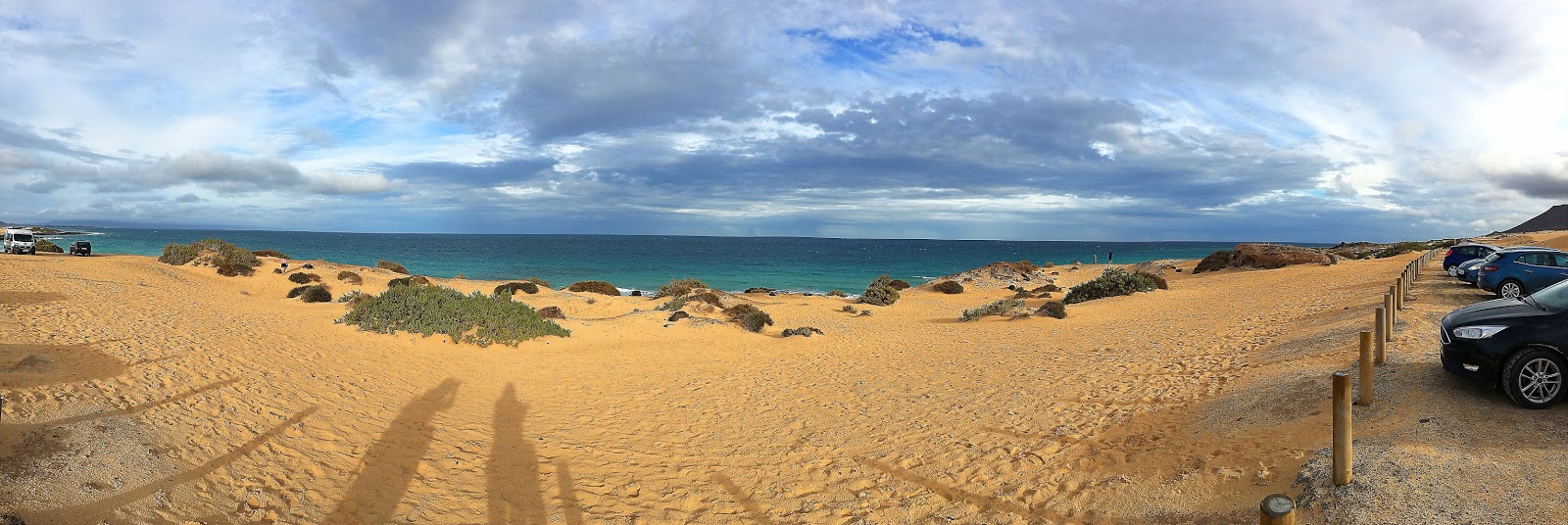
picturesque island. From the endless rolling dunes of Corralejo to the dry and
dusty El Jarde plains, this was my first foray in to Canary Island birding and
it certainly didn’t disappoint.
 |
| Fuerteventura Chat |
Housekeeping:
Our trip to Fuerteventura
involved travelling around the Northern half of the island, incorporating
Corralejo, El Cotillo, La Oliva, Vega de Río Palmas, Caleta de Fuste and the
plains south of Triquivijate, with specific targets of Houbara Bustard,
Cream-coloured Courser, Fuerteventura Chat, Trumpeter Finch, Ruddy Shelduck,
Berthelot’s Pipit, Barbary Partridge and African Blue Tit. 10 lifers and 52 species in total were seen
during our 4 days in Fuerteventura, covering the 24th October – 28th
October 2016.
 |
| Houbara Bustard |
 |
| Cream-coloured Courser |
 |
| Ruddy Shelduck |
 |
| Berthelot's Pipit |
 |
| African Blue Tit |
We hired a car for the
duration of the trip from Hertz and flights were direct return from Manchester
to Puerto del Rosario. We had no specific route during our journey, and instead
travelled sporadically to a number of sites in the northern half of the island.
From our base in Corralejo we had easy access to all of the sites in the area,
with no journey taking more than an hour. We stayed in a total of 2 hotels
during the trip – a late arrival in to Puerto del Rosario saw us stay in the
town for the night at JM Puerto Rosario, before heading north the next day to
our base at Corralejo Lodge, – a self-catered villa complete with outside pool.
Daily Diary
Day 1:
After catching the late afternoon
flight from Manchester to Fuerteventura airport, our after dark arrival left no
time for birding, instead settling down in our hotel ready for an action packed
first day to follow. Awaking bright and early the next morning under strict
instructions from Alex that he didn’t want a late start, I was dismayed to find
my 6am “rise with the larks” wake up call had all been in vain – the streets
outside were still bathed in inky darkness an hour later and the first hints of
the Canary Islands sun didn’t start to break through the black for another hour
or so after I was ready!
Never the less, as soon as the
first golden rays hit the sparkling waters of the harbour outside we were well
on our way, several Yellow-legged Gulls cruising above the waves and taking
advantage of the discards from the previous day’s fishing catch in the port our
first taste of Fuerteventura birds, while a gang of Spanish Sparrows chirruped
away in their palm tree roost lining the road. Heading south out of Puerto del
Rosario and winding through the tall buildings on the outskirts of town we
caught a brief glimpse of a swift species flying low down directly overhead –
possibly Plain – but having had poor views and unable to confirm its identity
from our split second views we could only note it down as a possible.
With rain threatening and ominous
forecasts given for our 5 day stay on the island, we abandoned our original plans
and headed straight for the closest site deemed best for the majority of our
target species – Reserva de El Jarde – aka the Bustard Reserve.
 |
| Reserva de El Jarde |
With the roads
carving through the mountainous landscape the views were stunning, if not a
little barren on the birding front. Several scans of the rubble and boulder
strewn roadsides revealed nothing of any note, and it wasn’t until we began to
travel down the approach roads to the reserve that the birding scene started to
come to life.
 |
| Southern Grey Shrike |
Several Southern Grey Shrikes
perched on the thorny scrubs and thickets surrounding the gravel track, while
my first lifer of the trip and a Macronesian endemic – Berthelot’s Pipit - casually
scurried in to view. Found only on these Spanish islands and slightly north in
Madeira, we saw several during our week here, although surprisingly they were
never abundant.
 |
| Berthelot's Pipit |
Carrying on along the track
revealed large flocks of Lesser Short-toed Larks feeding amongst the tiny
pebbles, while a flash of black and white by the farmyard building signalled
the familiar bounding flight of a Hoopoe. Several groups of Spanish Sparrows
congregated on the spilt grain and seeds amongst the old farm machinery and it
wasn’t long before we had locked down our next key target species of the trip
in the form of a small flock of Trumpeter Finches.
Feeding in the weedy scrub
along the fence line of the farm, we immediately stopped the car and got our
scopes on them, making out their chunky red bills and grey tones before the
whole flock took off as one and headed out over the plains. Luckily, after our
brief first sighting, we caught up with a further two birds much closer a
little way along the track, perched on the chain-link fence and offering the
chance for a couple of record shots. With their colourful appearance this was a
species I was particularly focused on seeing, and having quite a nomadic and
sporadic appearance on Fuerteventura it was great to succeed so early on with
them.
 |
| Trumpeter Finch |
Scanning the plains for Barbary
Partridge and Cream-coloured Coursers, only the Canary Islands race of Common
Buzzard caught our eye, while further Berthelot’s Pipits perched obligingly on
the fences and rubbery cacti lining the few gardens in the area.
 |
| Buzzard - Canarian subspecies |
 |
| Berthelot's Pipit |
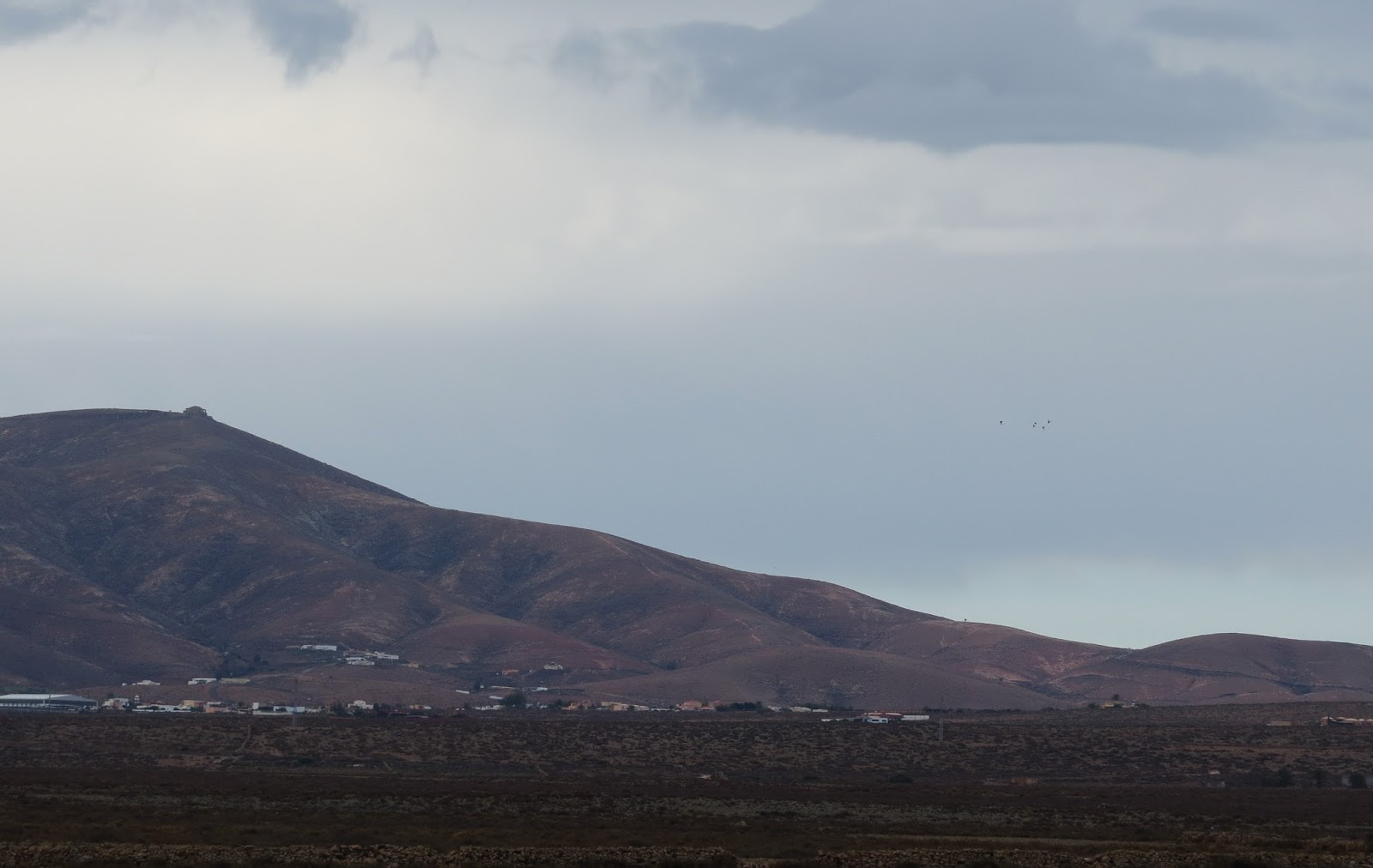
A flock of
around ten Black-bellied Sandgrouse flying overhead were also of note, their
distinctive pig-like cries rattling across the valley.
 |
| Black-bellied Sandgrouse and the mountains... if you squint close enough! |
With the billowing black rain
clouds that had formed over the mountains threatening to unleash their torrents
upon us, we had limited time before the heavens opened, and sure enough as soon
as I picked up a small party of Cream-coloured Coursers delicately hurrying
through the rubble in the distance, we felt the first spots of rain on our
foreheads.
 |
| Cream-coloured Coursers - can you spot them all!? |
Luckily, as is often the case
with southern European rainstorms, the shower passed quickly, and having taken
shelter in the car we set about trying to re-find the coursers. Thankfully they
hadn’t gone far, instead having moved even closer to the road and offering
great views as they scuttled from boulder to boulder. The species I was most
looking forward to seeing on our trip, we could really admire their gorgeous
cream colouration and striking striped head patterns, and it was fantastic to
be able to watch them at length so close up.
 |
| Cream-coloured Courser |
With no further sign of any Trumpeter
Finches around the farm we headed over to the reserve field itself, an area of
habitat specially managed for Houbara Bustards and other plain dwelling species
to aid in their conservation on the island. Approaching the stone wall border,
we set up our scopes to scan through the limited vegetation and rubble on high
alert for any signs of movement.
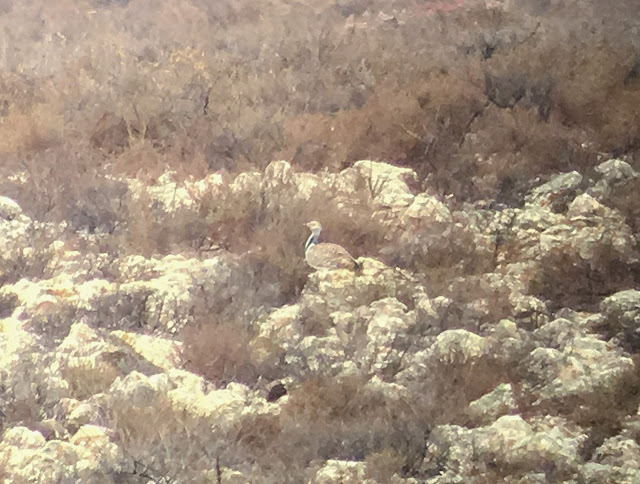
With the plains seemingly deserted after ten
minutes of searching, a snatch of Spectacled Warbler song caused me to start
checking much further right in an attempt to locate this charismatic singer.
Noticing a slight movement in the boulders below the scrub, my immediate
reaction was that it was a pigeon or dove, before closer inspection revealed I
had stumbled across one of our key targets for the trip and a species we feared
may have been hard to come by – Houbara Bustard!
 |
| Houbara Bustard - distant but distinctive! |
Excitement ensued, and getting
Alex’s scope on the bird too we both watched as it crept stealthily through the
rubble, the Bustard’s superb camouflage working a treat and only its movement
betraying its location. Watching this fantastic species at length as it moved
further out in to the open, we could clearly see the attractive grey neck
marked with black and white stripes as the bustard foraged between the rocks –
an incredible experience and great to score within the first morning of our
trip. With a whole host of our target species in the bag before lunch the
pressure was now off, but the El Jarde Reserve kept on giving when Alex spotted
two Ruddy Shelducks sat by the side of the track as we were leaving.
 |
| Ruddy Shelduck |
With feral
populations inhabiting Europe it was great to see the real deal here in
Fuerteventura, and we were relatively surprised to see these large ducks away
from any significant bodies of water, looking quite out of place on the dry
dusty plains of the farmland.
With the majority of our target
species for Reserva de El Jarde under our belt, we decided to move on to our next site- the lush villages of Vega de Río Palmas and nearby Betancuria.
Lined
with palm trees and a far cry from the barren landscapes of El Jarde, after
pulling up outside the green vegetated areas of the park at Plaza Concepción it was only a
matter of seconds before we had located our next target – a high pitched
tweeting revealed two smart African Blue Tits hopping through the leaves above
our heads – if only all birds could be as easy as that!
 |
| African Blue Tit |
Affording great views
as these much brighter and bolder relatives of our more familiar European Blue
Tits preened and perched on the branches, we saw several more of these
charismatic birds on our trip, including a further two individuals elsewhere in
Betancuria – a definite hotspot for this species and a reliable site for
locating them.
Heading towards Vega de Río
Palmas – a usually reliable site for Laughing Dove on Fuerteventura – we were
able to admire the beautiful scenery this part of the island holds, with the
roads winding through the huge mountains and offering spectacular views across
the plains below.
Sadly Vega de Rio Palmas and the surrounding palm trees drew
a blank on the Laughing Dove front despite extensive searching, with just an
unconfirmed view of a darker coloured dove powering along the side of the
road before disappearing into a nearby copse of trees our only possible
sighting.
Arriving at the small parking
space amongst the unkempt allotments and gardens at Barranco de las Peñitas, we
immediately set to work birding the area. A familiar scratchy song emanating
from the scrub signalled our first Sardinian Warblers of the trip, while the
Canary Islands subspecies of Robin serenaded us from a nearby water pool.
Enjoying a quick bite to eat as Ravens cronked overhead, we watched as a
Kestrel attempted to hunt in the arid surrounds while the unmistakable orange
flash of a Monarch butterfly flitted powerfully over the car.
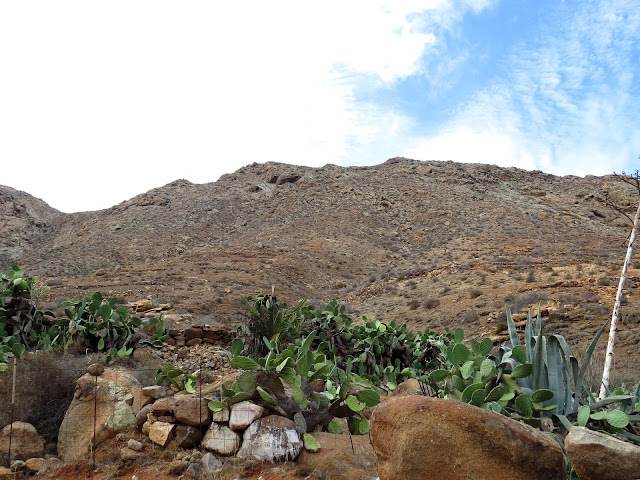 |
| The valley at Barranco de las Peñitas |
It wasn’t long until Alex had picked
up an extremely distant chat on the slopes, although zooming in with the scope
unfortunately didn’t reveal any of the finer details. Whilst European
Stonechats on the island are extremely few and far between, we wanted better
views to really nail the ID as our Fuerteventuran endemic, so it was rather
frustrating when it hopped down in to a ridge and didn’t show again.
Unperturbed, we continued to scan the rest of the slopes, Alex again picking up
another of our target species in the form of a pair of Barbary Partridges
stepping gingerly across the scrubby rocks. Similar to our Red-legged
Partridges, these African originals differ in their facial patterns, having a
much more reddish-brown tone overall and a lack of white on the face. The thin
brown shawl around the neck complete with white speckles is also distinctive.
 |
| Spot the Barbary Partridge! |
 |
| The slope the Partridges were living on |
With no further sign of our chat
we headed back towards the car, a third African Blue Tit perched on the metal
fencing providing excellent views as we kneeled close by.
Remarkably, the noise
from the Blue Tit had attracted another bird close in, and taking a look
through our binoculars we were stunned to see a fine male Fuerteventura Chat
staring back at us, bobbing up and down on the scrub and providing outstanding
views. Remarkably it proceeded to come even closer, at one point settling mere metres away – what a way to see a lifer!
 |
| Fuerteventura Chat! |
Endemic to the island of
Fuerteventura, Fuerteventura Chats have now been split and enjoy full species
status, differing from European Stonechats by their all white throat and small
white eyebrow above the eye. Truly smart little birds, we savoured these
incredible views as it hopped from cactus to cactus in the garden.
Winding our way back through the
valleys and back in to Betancuria revealed two more African Blue Tits calling
loudly from a stand of nearby conifers, while a short drive around the nearby
farm settlements resulted in point blank views of several Berthelot’s Pipits
feeding in the soil as a second Hoopoe preened on the roadside fence.
 |
| Berthelot's Pipit |
Stopping
off by the side of the road in an attempt to ID a species of butterfly hovering
above the car also resulted in us flushing a covey of 12 more Barbary
Partridges, this time tolerating much closer views and even allowing a brief
record shot before they scattered.
 |
| Barbary Partridge record shot! |
We also came across our first
Barbary Ground Squirrels of the trip, native to Africa but introduced to
Fuerteventura in the 1960’s where the population is now thriving.
 |
| Barbary Squirrel |
Having combed the area for
Laughing Doves but with no success, we headed towards the north of the island
where a brief stop at Casa de los Coroneles drew a blank in terms of bustards
and coursers – several Berthelot’s Pipits foraging for ants in the sandy soil
the only birds of note here.
 |
| Casa de los Coroneles |
 |
| Berthelot's Pipit |
Arriving at our hotel in
Corralejo we stocked up on juice and supplies for the coming days before
settling down for the night, enjoying a delicious Spanish meal of flavoursome
ham with hot cheese and tasty pork steaks at a local restaurant. With the
majority of our target species already seen on our first morning, there was now
only the realistic prospect of Laughing Dove to add to our trip list as a new
bird over the coming days. Our first foray in to Fuerteventura birding had
certainly been a huge success, and we headed to bed looking forward to what the
next few days would bring.

 Arriving on the
muddy clay tracks, several Yellow-legged and Lesser Black-backed Gulls milled
around the last remains of the water source, joined by a further 5 Ruddy
Shelducks.
Arriving on the
muddy clay tracks, several Yellow-legged and Lesser Black-backed Gulls milled
around the last remains of the water source, joined by a further 5 Ruddy
Shelducks.