A tale of nature, wildlife and birding from Cheshire, North Wales and across the globe....

A tale of nature, wildlife and birding from Cheshire, North Wales and across the globe....

Thursday, 12 May 2016

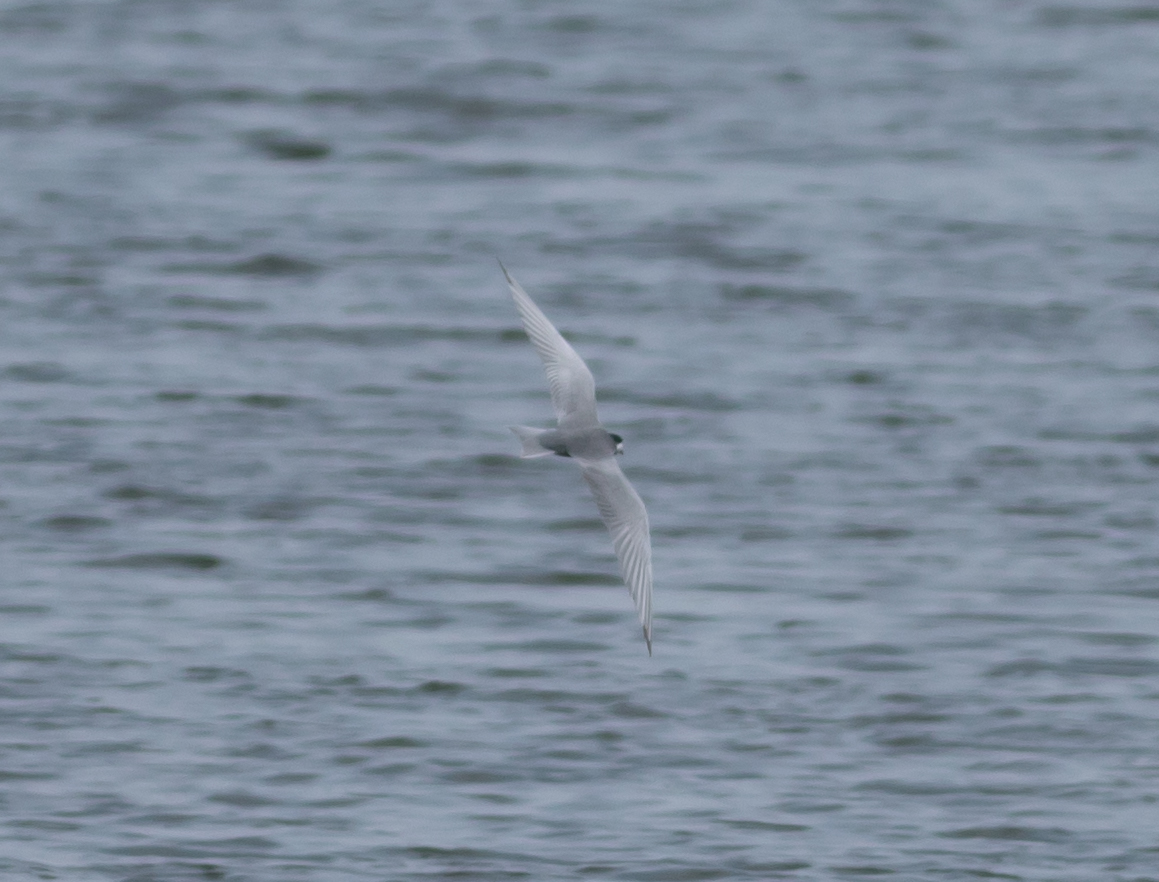
Whiskered Terns at Sandbach Flashes, Cheshire

With Whiskered Tern still being a species I needed in Britain, two turning up at Long Eaton Gravel Pits in Derbyshire on Friday morning before relocating to Attenborough Nature Reserve across the border in Nottingham for the remainder of the evening had me tempted to make the journey over the next day for my last remaining species of ‘Marsh Tern’ to see in the UK.

However, it seems the terns had other ideas, and checking my phone in the early hours of Saturday revealed them to have departed overnight, leaving just a solitary Black Tern in their wake. Fast forward a few hours and having drifted back off to sleep, I was this time woken up by a phone call from Alex (my previous weeks lie in had been cut short by the news of the White-crowned Sparrow at Woolston Eyes) – the two Whiskered Terns had been re-found at Sandbach Flashes in Cheshire, just 20 minutes away from my house.

Grabbing a quick breakfast on the way out, we were soon on our way, and 20 minutes later were enjoying great views as the two terns paraded around Elton Hall Flash, swooping low over the surface of the water to feed and displaying their gorgeous sooty grey bellies and bright white contrasting under tails.
Whiskered Tern - Sandbach Flashes, Cheshire
Perching regularly on several of the wooden fence posts submerged in the water, we were treated to excellent scope views of the pair, on some occasions even flying alongside and perching with the single Common Tern that was present and in turn offering a great comparison between the two species.
Whiskered Terns - Sandbach Flashes, Cheshire
Both Whiskered Terns together
Whiskered Terns - Sandbach Flashes, Cheshire
Common and Whiskered Tern - Sandbach Flashes, Cheshire
Common Tern on the left, Whiskered Tern on the right
The size different was extremely noticeable in flight – the Whiskered Terns being much smaller, while the Common’s longer tail feathers were also apparent. We were also able to note another key identification feature of Whiskered Tern - their shallow forked tails were clear to see as they dipped and dived, while their greyish rumps also contrasted to the Common’s pure white backs.
Whiskered Tern - Sandbach Flashes, Cheshire
The shorter forked tail and grey rump of the Whiskered Tern is clear to see in flight
Whiskered Tern - Sandbach Flashes, Cheshire
Mostly keeping their distance and remaining in the middle of the flash, one would occasionally power over to the near side, on one occasion feeding just metres away in the corner, giving outstanding views to the gathered crowd before moving swiftly back over to the far edge of the water.
Whiskered Tern - Sandbach Flashes, Cheshire
Looking superficially like a cross between a Black Tern and a Common Tern, the gorgeous jet black hoods, blood red bills and dark crimson feet all stood out, even at a distance.
Whiskered Tern - Sandbach Flashes, Cheshire
Departing as expected the next day, two (probably the same) were reported from Saltholme RSPB in Cleveland, adding further mileage to their tour of the UK. With several other Whiskered Terns reported in Gloucestershire, Hampshire and Somerset over the past few days, the warm weather and winds from the continent seem to have resulted in a mini influx of these delightfully acrobatic terns, and being the very first site record, they are another great local bird for Sandbach Flashes.
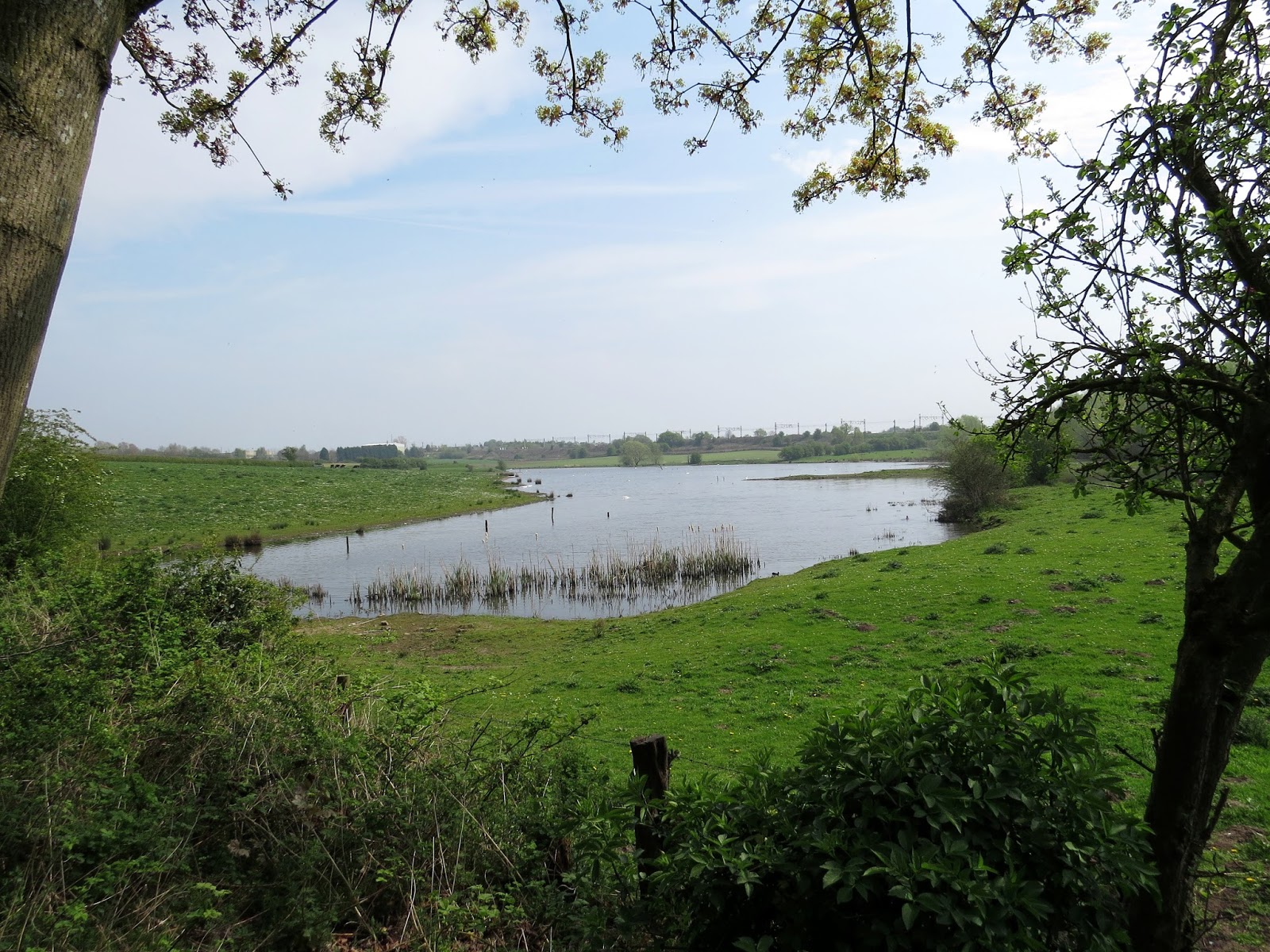
Sandbach Flashes, Cheshire
Elton Hall Flash
Having seen just a single bird in Southern Spain two years ago and having missed a juvenile bird at Burton Mere Wetlands in the Autumn of 2010, these were the first local Whiskered Terns in 5 years that I could get to, and it was great to see this European rarity relatively close to home – always ideal!  

Monday, 9 May 2016

A taste of the Orient - Oriental Turtle Dove in Otford, Kent (MEENA!)

When news came out that an Oriental Turtle Dove of the subspecies meena had been visiting a back garden in Kent whilst I was away in Florida at the beginning of April, I was a tad gutted to say the least. Not going down for the Chipping Norton Oriental Turtle Dove back at the beginning of 2011 has always been a bit of a regret, and this was a bird that I had thought I would struggle to get back, with there being just one other previous twitchable mainland bird in Caithness, Scotland in 2003.

It later transpired that the Kent bird had been present in the garden of finder Tony Rose on the 18th February, but with no sign the next day and without an exact location other than the village of Otford, it seemed this particular bird would remain out of grasp and the trail sadly went cold.
Oriental Turtle Dove (Meena) - Kent
An EXTREME record shot of the Meena!
However, this all changed on Thursday 28th April, when a report came through that the bird had been spotted again the previous Sunday. With further sightings on the Friday and with the exact location being expertly nailed down and released on Saturday when the bird showed well during the late afternoon and evening, I was therefore weighing up whether or not to make the long journey down to Kent from Cheshire the next day, especially as Alex, having seen the Chipping Norton bird, wouldn’t even get a lifer from it!

Deciding to wait until the weekend after, photos surfacing of the bird perching obligingly in the tree the next morning swiftly changed my mind – the bird was again present and showing well. Becoming determined to get down and see the beautiful dusky pink tones of the meena for myself, we were soon well on our way along the M6 - Alex in tow having been persuaded to come along for the ride, despite his protests that meenas were just a ‘regular’ bird after the recent individual in Shetland! (Just 5 records ever in Britain would suggest otherwise...)

Arriving at Old Walk Road on the small housing estate just off the A225 some 4 hours later, we turned the corner to be met by a large crowd of birders and scopes stationed on “The Butts”, all staring intently in to the back gardens of the houses while bemused residents and passers stopped to take photos of the assembled gathering.
Oriental Turtle Dove twitch - Kent
The gathered crowd
Luckily, despite the bird not having been seen since that morning, we didn’t have long to wait before it put in an appearance, flying up and in to a large Sycamore tree at the end of the garden. Apparently having established a routine - being seen first thing in the morning for a couple of hours and again in the evening from 4pm onwards - the bird powers in from the south from an unknown location each day before flying in to the trees and perching intermittently on view before dropping down in to the garden out of sight to feed.
Oriental Turtle Dove - Kent
The trees in question the Meena has been favouring during dawn and late evening
Providing good scope views, the Meena remained slightly obscured at times, sadly not perching out in the open in one of the bare leaved trees as so many of the great photos captured depict. Never the less, we were treated to a show of the diagnostic features as the bird moved through the leaves – the smaller darker eye, reduced white on the barred collar and the overall darker, more rufous appearance all apparent. Giving prolonged views for a good 20 minutes or so, the dove eventually dropped down and in to the garden out of sight, not reappearing again for another two hours – we’d timed our arrival perfectly.
Oriental Turtle Dove (Meena) - Kent
The reduced white on the collar is clear to see, as well as the more dusky colour tones
Oriental Turtle Dove (Meena) - Kent
The smaller darker eye and more rufous tones can still be made out despite the horrendousness of the photo!
With two races of Oriental Turtle Dove recorded in Britain (meena and orientalis), the Kent record follows in the footsteps of the recent Shetland bird back in December, making meena the now greater recorded race here in Britain out of the two with 5 records as opposed to 4. With meenas originating from central Asia as opposed to the Far East and Siberian localities of orientalis, there are also slight differences between the two races in appearance (orientalis being larger, with a darker and duller colouration than the brighter pink of the meena, while meenas also have a distinctive large white under patch on the base of the tail). Despite these differences though, there are no immediate plans to split the two.
Oriental Turtle Dove (Meena) - Kent
With 8 out of the 13 records of Oriental Turtle Dove coming after the turn of the century (5 being in the past 5 years), awareness of this species is clearly improving, and with the majority of records originating in gardens, hopefully there will be many more sightings to come in the future of this charming eastern dove.

Wednesday, 4 May 2016

Mega!! White-crowned Sparrow at Woolston Eyes, Cheshire!

"Woolston Eyes – White-crowned Sparrow trapped and ringed, access will be arranged soon."

Still lazing in bed on the Saturday morning, the above email message from Paul Brewster at just before quarter past 9 soon had me leaping in to action! White-crowned Sparrow in Cheshire?! – Mega!! Just over 20 minutes away from my house, this was a huge bird for Cheshire, not to mention Britain, with just 5 previous records on these shores. With well twitched individuals such as the Seaforth bird back in October 1995 and the long staying Cley bird in 2008, this was a much needed species for the more recent listers, and not having been actively twitching 8 years ago, this was definitely a must-see bird, especially being so close to home.
White-crowned Sparrow - Woolston Eyes, Cheshire (David Bowman)
David Bowman's lovely photos of the White-crowned Sparrow in the hand
With the sparrow having been released near the feeders at John Morgan hide and access hastily arranged for non-permit holders, I arranged to meet Alex on site at just before 11 – having been out on the Clwyd this was the earliest he could make it. Initially sceptical as to whether we would be able to connect (trapped and ringed birds often have a habit of completely vanishing once released) and with no further sign by 9:50am, the news at just after half 10 that it was back and showing well by the feeders came as a welcome surprise – maybe we would score after all!

Having duly paid our £2 to gain access in to the reserve and hurrying over to the hide in question, our hopes of this attractive American sparrow happily feeding on a mass of golden seed under the feeders and performing well for a crowd of admirers were soon dashed – the bird had apparently gone in to hiding in a large thicket of bush to the left hand side of the hide, and despite being just metres away from the assembled birders, had been impossible to locate for well over an hour. In fact, it later transpired that it was only spotted when two birders had walked in to the bush to ascertain whether it was still there or not, and the bird had flown on to a nearby branch.

Joining the swelling crowd and enduring frequent showers of heavy rain and hail, we kept our eyes focused on the bush the sparrow had last been seen in, willing it to make a reappearance and to get a glimpse of a flash of white from inside the thicket. Moving away from the shelter of the hide and further around the spot where the sparrow was last seen, it soon became clear that there was no movement amongst the bottom branches or the leaf litter – the White-crowned Sparrow most definitely wasn’t under there. Whilst everyone else was staring transfixed on the spot, I decided to scan the surrounding bushes just in case the sparrow had taken an escape route undetected. Turning my attention to the next bush across, I immediately clocked several Blackcaps and Robins feeding amongst the hawthorn, while a Chiffchaff flitted in-between the leaves.
White-crowned Sparrow twitch - Woolston Eyes, Cheshire
The trees where the White-crowned Sparrow was hiding!
Then, a small brown and grey bird sat in the join of a branch soon caught my eye. Its head slightly obscured by the tangle of Hawthorn leaves, it was hard to pick out – could it be a Dunnock? Grey and black striped facial markings as the bird moved its head convinced me otherwise, and as it hopped down to a lower branch and out of view, a prominent white wing bar (looking like a string of pearls) became obvious. This looked increasingly good - although never having seen one before and with the crown partially obscured, I wasn’t 100% sure. Alerting Alex to get on the spot whilst checking my Collin’s app for the finer features of White-crowned Sparrow ID, Alex soon called out he had it – the bird had reappeared and settled on a branch for a matter of seconds before dropping down again – just long enough for Alex and several other nearby birders to get on it and get views of the white crown, confirming my suspicions. Fantastic!! White-crowned Sparrow in the bag!!
White-crowned Sparrow ID
The finer points of White-crowned Sparrow ID!
With many birders yet to get on it but with our sparrow seemingly vanishing in to thin air, despite further vigils staring in to the bush, many left disappointed, and with no further sign throughout the afternoon and in to the next day, our sighting was seemingly the last of this trans-Atlantic vagrant. Incredibly jammy to say the least.
White-crowned Sparrow bush - Woolston Eyes, Cheshire
The bush the sparrow disappeared into
With the White-crowned sparrow most likely to have found its way over to Britain last autumn during the storms, or perhaps even elsewhere in Europe, the arrival at Woolston Eyes could well have been the result of a natural parallel migration north - American birds would also be heading north at this time of year in their normal range. The fact that the ringers reported that it appeared to be in a good condition when captured with plenty of muscle mass (as well as there being no particularly adverse weather during the spring originating from across the Atlantic) would support this theory, while a first summer Rose-breasted Grosbeak found yesterday on a feeder in Shetland only adds further weight to this - presumably another parallel migrant on the wrong side of the ocean.

White-crowned Sparrow was actually one of the American sparrow species we had missed on both of our visits to the states, so it was a stroke of luck and completely unexpected to be getting it as a lifer here in Britain! With lengthy gaps between records, it could be some time yet before Britain scores another, especially one minutes away from my house, so we both felt extremely fortunate to see it – albeit briefly – and it was refreshing to get our first mega of 2016. Woolston Eyes was also a fantastic reserve to visit, and with this only being my second visit (the first was for an escaped Bufflehead last year), I may well look in to investing in a permit for future trips. 

Wednesday, 27 April 2016

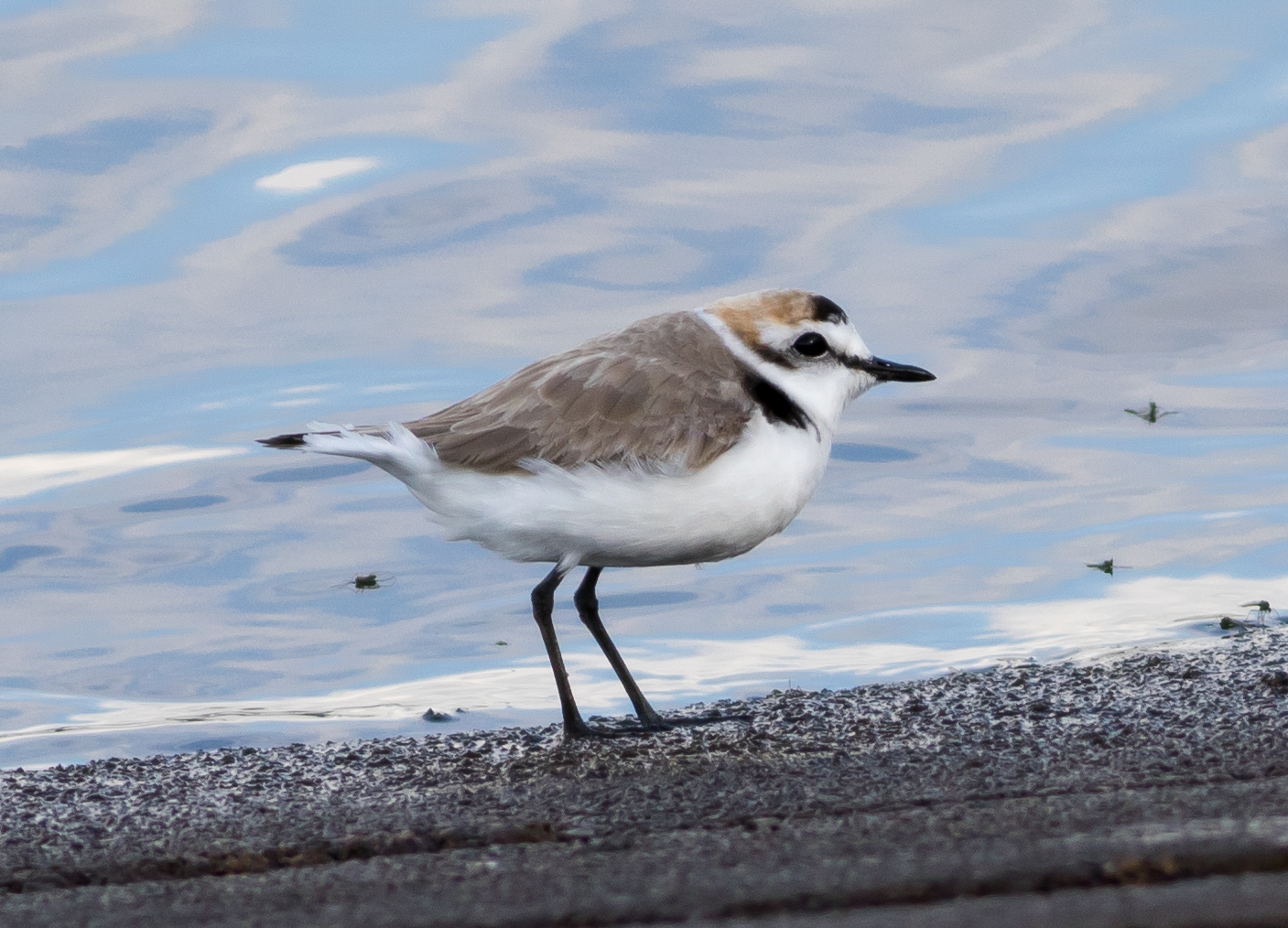
Kentish Plover - Audenshaw Reservoir, Manchester

Coming back from a meeting at work on Monday morning to discover an excited message from Alex exclaiming a fine male Kentish Plover had been found on Audenshaw Reservoir in Manchester, it was therefore a tense wait until the end of the day to see whether the bird would still be present and whether or not we would get there in time.

Luckily however, despite the inevitable tedium of the M60 and the associated almost standstill rush hour traffic, we arrived at Audenshaw Reservoir to news that the Kentish Plover was still there and showing well on Reservoir 3. Eventually locating the right hole in the fence to get in (it has been a good few years since my last visit and the old gap had been mended) we were soon on our way around the expanses of water and over to the western edge of the reservoir running alongside the motorway in pursuit of our plover.
Kentish Plover - Audenshaw Reservoir, Manchester
Kentish Plover - Audenshaw Reservoir
After a 20 minute walk in the biting cold and bitter wind (who’d have thought it was April?!) we caught up with the small group of assembled birders and scoped out along the shoreline to try and pick out the Kentish. Bingo – we soon had our target, and the bird proceeded to show incredibly well, feeding along the water’s edge right in front of us and taking advantage of the high quantity of flies congregating above the water’s surface.
Kentish Plover - Audenshaw Reservoir, Manchester
With both Little Ringed and Ringed Plovers associating on the same stretch of bank as the Kentish, the differences between the three were extremely apparent – the much cleaner white of the Kentish Plover stood out from a distance, and the rich ginger cap, incomplete black breast band and the neat black markings on the head were also clear to see.
Kentish Plover - Audenshaw Reservoir, Manchester
Having seen Kentish Plovers in both Spain and Portugal, as well as the extremely similar Snowy Plover in America (both species themselves split from the African White-fronted Plovers) it was great to finally see a British bird at last – although I don’t think any of us expected for one to turn up on the concrete banks of Audenshaw reservoir of all places!
Kentish Plover - Audenshaw Reservoir, Manchester
A far cry from a shingle beach down south - the concrete edges of Audenshaw! 
Kentish Plover is also a fantastic bird for the North West - the previous county record for Greater Manchester was over 35 years ago, while another unexpected individual was recorded on my local Neumann’s Flash way back in 1991. The female at Cockersand Abbey in May 2011 (slightly before my twitching days) was the last twitchable North West opportunity however, and this was a bird I regrettably didn’t travel up for at the time.

Once a British breeding species with a particular stronghold at Dungeness in Kent up until the 1930s, Kentish Plovers sadly now only occur annually in very small numbers on passage, usually at coastal locations in the southern counties. The birds will often get pushed on by tidal movements (only being one-dayers as a result) so this was a bird that I had been struggling to get back for the last 5 years, especially as very few tend to reach the northern counties!
Kentish Plover - Audenshaw Reservoir, Manchester
Still present the next day and showing well on the banks of Reservoir 3, this was a brilliant local bird that any North West birder would have been mad to miss, and although it appears to have departed on the morning of the 27th, the majority who needed it will most certainly have left happy after achieving stunning views of what was a fantastic little bird!
  
Alex's great video of the Kentish Plover

Monday, 18 April 2016

Iberian Chiffchaff in Telford, Shropshire!

With an Iberian Chiffchaff turning up in Lancashire towards the end of our two week trip to Florida, I was hopeful that this individual would stay the course and I’d be able to catch up with this Iberian speciality on my return. Unfortunately however, doubts were quickly raised about its identity – the song appeared untypical of Iberian Chiffchaff once sound recordings taken on site were analysed and it was quickly dismissed as an imposter – sadly, not making the grade.

Luckily however, the UK seems to be experiencing a spring influx of these delightful Mediterranean songsters at present, and after a year’s absence with no records during 2015, there have been a further three additional reports of Iberian Chiffchaffs this past week, with individuals in Coverack in Cornwall, Tresco on Scilly and of course, Telford in Shropshire.

First reported on the Sunday afternoon straight after our 8 hour flight back from Orlando and quickly confirmed as being the real deal, I had no chance of getting down to Shropshire until a week later, where thankfully this Mediterranean speciality had set up territory in a patch of woodland, often showing well and calling frequently.
Iberian Chiffchaff - Telford, Shropshire
The Iberian Chiffchaff in Telford, Shropshire
After a leisurely lie-in on the Saturday morning, we made our way down to where the bird had set up territory just off Granville Road in Telford (TF2 7NB) for the early afternoon, wholly expecting it to be in full song when we arrived and showing well in the now glorious sunshine (it had apparently snowed that morning!). Sadly however, it didn’t pan out that way, and we endured a painstaking 2 hours staring at a group of trees in the freezing cold (the warmth of the sun had completely vanished to be replaced by menacing looking rainclouds and a chilling breeze) where the bird only called once distantly! Starting to worry, it was a relief therefore when we heard the distinctive call further around the corner, and heading over that way with the group of assembled birders following, Alex eventually tracked down this subtle warbler, calling just a few feet in front of us low down in the branches and showing well.
Iberian Chiffchaff - Telford, Shropshire
For the next ten minutes or so we followed our target through the trees as it worked its way along the hedgerow, often perching in full view and treating us to blasts of now familiar song. Sounding the initial first notes of “chiff chiff chiff”, this was quickly followed by a warbling variation, much different to any of the Chiffchaffs or Willow Warblers that were also present on site that had been singing throughout the afternoon, and unlike several recent birds in West Sussex and Cambridgeshire a few years back (and possibly the Lancashire bird) it was also quite clear that this was not a mixed singer. While every time I pressed record on my camera to try and capture the call the Chiffchaff seemed to go mute (typical!), Alex managed to get an excellent video of the song, illustrated below:


Formerly treated as just a race of Common Chiffchaff in the past, Iberian Chiffchaffs were recognised as a separate species by the BOU 18 years ago due to a range of differences, including vocalisation, morphology and genetics. Indeed, as well as the call, there were slight variations in the plumage that while subtle, were still noticeable in the field at Telford. The bill was slightly longer than a Common Chiffchaff with a much paler lower mandible, while the legs were much lighter, appearing to be an intermediate shade somewhere in between Chiffchaffs and Willow Warblers. The plumage was also a brighter green than a Common Chiffchaff, often looking a grey-olive colour, while there was a yellowish wash to the head, cheeks and extensive supercilium, again more so than you would expect to see on a Common Chiffchaff. Studying the photos of the bird later at home, I could also clearly see the indistinct and broken eye-ring that is limited to just the lower edge of the eye – another pro Iberian Chiffchaff feature.
Iberian Chiffchaff - Telford, Shropshire
The broken eye-ring on the lower edge of the eye is clearly visible, as is the yellowish colouration of the head and breast
With only 37 accepted records in Britain, this is a bird I have been wanting to catch up with in the UK for a while, having missed the last local bird in Blackpool back in May 2011. With the vast majority of records occurring in the last 10 years however (25 out of the accepted 37), Iberian Chiffchaff has fast turned from what was once a mega rarity in to a now nearly annual expected spring overshoot, with small influxes like this occurring in several of the past recent years.
Iberian Chiffchaff - Telford, Shropshire
With the finer plumage details matching up and the call (which has been recorded and sonagramed) spot on for Iberian Chiffchaff, there is no doubting the ID in my opinion, with this individual being the real deal. It was great to enjoy hearing him sing prolifically and show so well for us – a great addition to my British list after seeing a pair in Spain two years ago and a fantastic bird to hear in person. 

Saturday, 26 March 2016

Portugal Birding Trip Report (14th February – 16th February 2016) - Species List and Locations

Day 1 – Faro to Aljezur

Iberian Magpie – 14th February – North of Aljezur on the N120, Rua 25 de Abril. (40+ travelling flock moving through the trees. Common and numerous throughout.)

Spanish Sparrow – 14th February – Ria de Alvor, small dirt track (Caminho da Espargueira). (A small number of males interspersed with House Sparrows. Only ones of the trip.)
Iberian Magpie - Portugal

Day 2 – Aljezur, Monchique and Lagos

Bonelli’s Eagle – 15th February – East of Maria Vinagre off the M1002 Estrada do Carrascalinho. (Two seen in total, soaring high)

Black-shouldered Kite – 15th February – South of Mexilhoeira Grande on the Rua 25 de Abril (north of the N125). (Seen well hovering and hunting. Only one of the trip)
Black-shouldered Kite - Portugal

Day 3 – Castro Verde to Faro

Great Bustard – 16th February – Castro Verde, west of Gueirero and east of Alcaria do Coelho, in fields north of the road. (Three individuals seen, though distant. Only birds of the trip.)

Black-headed Weaver – 16th February – Pools at Quinta do Lago at the San Lorenzo Golf Club (off Rua Douro). (Male and several females seen well in the reeds. Male paired up and singing. Only birds of the trip.)
Black-headed Weaver - Quinta do Lago, Portugal

Also of note: Probable Spanish Imperial Eagle - Castro Verde, south of Corte Pequena. Too distant to confirm but pale underside, apparent white rump and dark tips to the wings.

Notable Species:

Cattle Egret
- Frequent all over and very common
White Stork - At many sites and common throughout
Greater Flamingo - Several individuals at Ria de Alvor
Purple Swamphen - Numerous on the golf course at Quinta do Lago
Little Bustard - Large flock seen at Castro Verde, south of Corte Pequena. 
Black-winged Stilt - One seen at Ria de Alvor
Kentish Plover - Three seen on the salt marsh at Quinta do Lago
Audouin’s Gull - One seen on the pool at Quinta do Lago
Black-bellied Sandgrouse - A handful seen in the fields at Castro Verde, north of Sao Marcos da Ataboeira
Pallid Swift - Several individuals flying around the pools at Quinta do Lago
Hoopoe - Several seen throughout the trip
Crested Lark - Numerous and several seen throughout the trip
Crag Martin - Numerous and several seen throughout the trip
Red-rumped Swallow - A couple seen at Castro Verde, north of Navarro
Sardinian Warbler - One seen in the scrub surrounding the fields at Ribeira de Aljezur 
Fan-tailed Warbler - A handful seen throughout the trip. More often heard
Iberian Grey Shrike - Numerous throughout the trip
Spotless Starling - Several seen throughout the trip
Serin - Several seen throughout the trip


Additional species:

Mallard
Gadwall
Shoveler
Teal
Pochard
Tufted Duck
Red-legged Partridge
Little Grebe
Great Crested Grebe
Cormorant
Little Egret
Grey Heron
Spoonbill
Red Kite
Marsh Harrier
Hen Harrier
Common  Buzzard
Kestrel
Peregrine
Moorhen
Coot
Ringed Plover
Golden Plover
Lapwing
Turnstone
Dunlin
Redshank
Greenshank
Black-headed Gull
Mediterranean Gull
Yellow-legged Gull
Lesser Black-backed Gull
Rock Dove
Stock Dove
Woodpigeon
Collared Dove
Common Swift
Great-spotted Woodpecker
Barn Swallow
House Martin
Water Pipit
Meadow Pipit
White Wagtail
Grey Wagtail
Robin
Black Redstart
Stonechat
Song Thrush
Blackbird
Blackcap
Dartford Warbler
Cetti’s Warbler
Chiffchaff
Firecrest
Wren
Great Tit
Blue Tit
Magpie
Jay
Raven
Carrion Crow
Starling
House Sparrow
Chaffinch
Linnet
Goldfinch
Greenfinch
Corn Bunting

Wednesday, 23 March 2016

Portugal Birding - Tuesday 16th February 2016 (Day 3 - Castro Verde and Faro)

With our final day in Portugal dawning and with brilliant blue skies weather-wise, we checked out of our hotel and left Lagos for the last time, making the journey up north to the well-known plains around Castro Verde an hour and a half away. Hoping our toll passes from the hire car company were working as we sped through countless check points, we were soon at our destination to begin the search for one of the species we were both most looking forward to seeing – Great Bustard.
Great Bustard Reserve Gates - Castro Verde, Portugal
The entrance to the Great Bustard Reserve in Castro Verde
Arriving at the gates to the popular Great Bustard reserve at Castro Verde, we were disappointed to find them closed, and without a guide we were sadly unable to enter. However, scanning the surrounding plains the habitat looked ideal, so we took the car down a nearby side-road in an effort to locate any wandering Bustards. Searching the distant fields, I soon locked on to three large birds heading distantly left - surely our target.
Great Bustard Reserve - Castro Verde, Portugal
The fields around the reserve - ideal habitat for Bustards
Being just too far away to confirm and quickly disappearing behind a hill, we decided to try and relocate them in the car, driving around the reserve and following the roads down to Viseus before heading east towards Guerreiro. Expecting dusty and potholed tracks in our hunt for the Bustards, it was a pleasant surprise to be met with road surfaces all in excellent condition even in this remote area – a reoccurring theme we noticed throughout our time in Portugal and putting the British roads to shame! 

As we stopped to scan, the cries of Black-bellied Sandgrouse echoed overhead, and we were treated to several flyover flocks during the morning. Like elsewhere in Portugal, the fields were teaming with bird life, and we encountered masses of larks and Corn Buntings in the lush grasses either side of the road. 
Castro Verde - Portugal
The lush fields of Castro Verde
Iberian Grey Shrikes and Spotless Starlings were a regular sight perched on the wires, while White Stork nests seemed to adorn every other telegraph pole, the huge structures balanced on specially placed platforms. 
White Stork - Portugal
White Stork nest
Raptors were also in abundance here, and we encountered several Common Kestrels, Common Buzzards, Red Kites and even Marsh Harriers – the latter a species I wouldn’t normally associate with this type of habitat. Sadly, the Lesser Kestrels eluded me yet again - something that will have to be put right with a trip to Extremadura in the future!
Marsh Harrier - Portugal
Marsh Harrier - an unexpected sight on the plains of Castro Verde
Approaching the patch of fields the Bustards looked to have flown to, we stopped the car at regular intervals to scan the surrounding plains, the heat haze making viewing somewhat difficult. It wasn’t long before Alex’s eagle eyes spotted one however, and getting me on it, we quickly noticed a further two individuals feeding with the first, gradually moving up the slope. Finally, a long-awaited lifer for both of us in the form of three magnificent Great Bustards.

More than likely the three birds we had spotted flying near the start of the reserve, we watched as they fed in the short grass, an iconic species in these parts and a bird we had both been wanting to see for some time. Despite the distance and heat haze, we managed a few record shots through the scope and admired the sheer size of these incredible birds. 
Great Bustard - Portugal
Extreme record shot of a very distant Great Bustard!
Even though flocks of up to 60 had been reported recently, these three individuals were the only ones of our trip, despite driving the tracks around Castro Verde until well in to the afternoon.

With a whole scattering of Great Bustard records around Castro Verde and the area being a well-known and important site for them, the best thing for anyone looking for them is simply to drive around the area, stopping the car and scanning for any movement on the plains. The fields around the reserve are a particularly good location for sightings if you can’t get on to the reserve itself, and the eBird map below shows the hotspots around Castro Verde.
Great Bustard eBird distribution - Castro Verde, Portugal
Distribution of Great Bustards this year from eBird

Saturday, 19 March 2016

Portugal Birding - Monday 15th February 2016 (Day 2 - Aljezur, Monchique and Lagos)

With the weather forecast to be considerably more promising for our second day in Portugal, we decided to head back up to Aljezur to see if the sun would tempt out the Snowfinch. Arriving back on site early the next morning, the conditions were a huge improvement on the day before – glorious blue skies and puffy white clouds met us as we pulled up at the side of the fields. Several Hoopoes soaked up the sun on the sandy banks lining the road, while the Iberian Grey Shrikes from Sunday again gave excellent views perched out in the open.
Hoopoe - Portugal
Hoopoe - always a welcome sight in the Med
Iberian Grey Shrike - Portugal
Iberian Grey Shrike
Iberian Grey Shrike - Portugal
The increase in bird life from the day before was soon apparent, with a greater number of Crested Larks happily feeding in the short grass at the side of the road, along with the familiar Meadow Pipits and Goldfinches. On closer inspection, we managed to unearth a Thekla Lark amongst them, the white eyering, distinct dark lores, and shorter bill distinguishing it from the similar Cresteds. 
Thekla Lark - Portugal
Thekla Lark - note the clear black lores and distinct eyering
Thekla Lark - Portugal
Several Corn Buntings foraging amongst the straw in one of the fields were also new in from yesterday, offering some hope that the Snowfinch may still make an appearance. Sadly it wasn’t to be, and a rather confiding male Sardinian Warbler was the best new bird we could manage.
Sardinian Warbler - Portugal
Male Sardinian Warbler - one of my favourite Mediterranean warblers
Sardinian Warbler - Portugal
With the Snowfinch having been present for around a week prior to our visit and apparently favouring the field where a large bull had been kept (according to reports it liked to feed in the straw), the fact the bull had now been taken away may have played a factor in the Snowfinch’s untimely departure. Disappointing to say the least, but after searching the entire surrounding area it was clear that the Snowfinch had most definitely moved on.
Ribeira de Aljezur - Portugal
The dreaded Snowfinch fields
With the rain threatening to dampen our day once again and having seen enough of the same patch of daisies to last a lifetime, we decided enough was enough and headed out further in to the Portuguese countryside in an effort to locate some of our other targets for the trip. Travelling east inland towards the Serra de Monchique mountain range, we scanned the wires, fences and trees scattered throughout the lush green farmland in an effort to locate any Black-shouldered Kites, a species I was especially keen to see.